

✨ This article was AI edited. Editorial responsibility: BrooksideChurch.net.
Produced with AI. This article was artificially generated. Editorial responsibility: BrooksideChurch.net.
Understanding the precise meaning of the word baptism requires examining its etymological roots, historical application in the Greco-Roman world, and theological development within the New Testament context. The ritual of water baptism stands as a central ordinance across orthodox Christian traditions, serving as an outward sign of an inward spiritual reality. This comprehensive analysis details the linguistic origins of the term, its usage in biblical manuscripts, and its profound spiritual significance for believers today.
Etymological Origins: Baptizo and Bapto
The English word “baptism” is a transliteration rather than a translation of the Greek noun baptisma (βάπτισμα). This noun derives from the verb baptizo (βαπτίζω), which itself is an intensive frequentative form of the root verb bapto (βάπτω). Examining classical Greek literature reveals the specific nuances of these terms before their adoption into Christian theological vocabulary.
Classical Greek Usage of Bapto
The root verb bapto primarily meant “to dip” or “to dye.” In secular Greek texts, it described the process of dipping a garment into dye to permanently change its color, or dipping a vessel into a larger container to draw water. The action implied a temporary submersion with a specific purpose—often resulting in a permanent transformation of the object, as in the case of dyed fabric. However, bapto was rarely used in early Christian texts to describe the ritual of baptism.
The Dominance of Baptizo
New Testament authors exclusively used baptizo to describe the Christian ordinance. The verb baptizo carries the meaning “to immerse,” “to plunge,” or “to overwhelm.” Classical authors like Polybius used baptizo to describe sinking ships, while others used it metaphorically to describe a person overwhelmed by debt or intoxication. The intensive nature of baptizo implies a total envelopment or complete submission to an element.
When applied to the Christian ritual, baptizo signifies a complete submersion in water, reflecting the total spiritual transformation of the believer. The transliteration of this word into Latin (baptismus) and eventually English (baptism) preserved the technical theological meaning developed by the early Church, distinguishing it from ordinary washing or bathing.
Theological Significance in the New Testament
The linguistic definition of immersion provides the foundation for the theological symbolism of baptism in the New Testament. The Apostle Paul explicitly connects the physical act of immersion with the spiritual reality of union with Jesus Christ in His death, burial, and resurrection.
Identification with Christ’s Death and Resurrection
In Romans 6:3-4, Paul articulates the core theological meaning of the word baptism: “Or don’t you know that all of us who were baptized into Christ Jesus were baptized into his death? We were therefore buried with him through baptism into death in order that, just as Christ was raised from the dead through the glory of the Father, we too may live a new life.”
The physical submersion under water visibly represents the burial of the old, sinful nature. The subsequent emergence from the water symbolizes the resurrection of the believer to a new life empowered by the Holy Spirit. This somatic enactment of the Gospel message makes baptism a powerful sacrament of initiation.
Covenant Initiation and Circumcision of the Heart
Colossians 2:11-12 draws a direct parallel between the Old Covenant sign of circumcision and the New Covenant ordinance of baptism: “In him you were also circumcised with a circumcision not performed by human hands. Your whole self ruled by the flesh was put off when you were circumcised by Christ, having been buried with him in baptism, in which you were also raised with him through your faith in the working of God, who raised him from the dead.”
Baptism serves as the boundary marker of the New Covenant community, signifying the internal “circumcision of the heart” achieved by the Holy Spirit. It publicly declares a believer’s allegiance to Christ and their inclusion in the visible body of the Church.
Historical Context: Jewish Purification Rituals
To fully grasp what the word baptism means in its original first-century context, one must understand the Jewish purification rituals that preceded it. John the Baptist did not invent the concept of water immersion; rather, he adapted existing practices to convey a new prophetic message of repentance.
Tevilah and the Mikveh
Second Temple Judaism practiced ritual immersion known as tevilah. Individuals seeking ceremonial purity—such as after touching a corpse, recovering from a skin disease, or converting to Judaism (proselyte baptism)—immersed themselves entirely in a ritual bath called a mikveh. The water in a mikveh had to be “living water” (flowing water from a natural source like a spring or river), which explains why John baptized in the Jordan River.
The Innovation of John the Baptist
While Jewish tevilah was often self-administered and repeated regularly for ongoing purification, John’s baptism introduced two critical innovations. First, it was administered by a recognized prophet (hence his title, “the Baptist”). Second, it was a one-time, unrepeatable act symbolizing eschatological repentance and preparation for the coming Messiah. John’s baptism of repentance laid the groundwork for the Christian baptism instituted by Jesus.
Comparative Analysis of Baptismal Modes
While the Greek word baptizo literally means “immerse,” historical circumstances and theological developments led to varying modes of baptism across Christian denominations. A comparative analysis clarifies these distinctions.
| Mode of Baptism | Methodology | Theological Rationale | Primary Denominations |
|---|---|---|---|
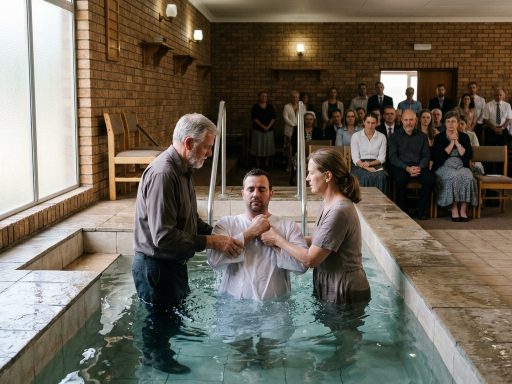
| Immersion | Total submersion of the body under water. | Strict adherence to the etymology of baptizo; clear visualization of death, burial, and resurrection. | Baptists, Pentecostals, Eastern Orthodox, Non-denominational. |
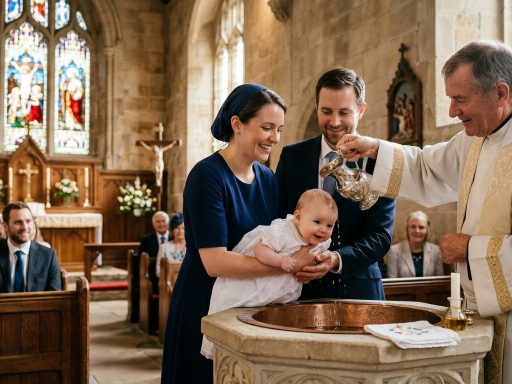
| Affusion (Pouring) | Pouring water over the head of the candidate. | Symbolizes the outpouring of the Holy Spirit (Acts 2:17); practical for arid regions or the infirm. | Roman Catholics, Methodists, Anglicans (optional). |
| Aspersion (Sprinkling) | Sprinkling water on the head of the candidate. | Connects to Old Testament purification rituals (Ezekiel 36:25, “I will sprinkle clean water on you”). | Presbyterians, Reformed, some Methodists. |
Despite differing methodologies, all orthodox Christian traditions agree on the Trinitarian formula commanded by Jesus in the Great Commission (Matthew 28:19): baptizing “in the name of the Father and of the Son and of the Holy Spirit.”
The Trinitarian Formula and The Great Commission
The meaning of the word baptism extends beyond the physical action to encompass the spoken authorization. In Matthew 28:19, Jesus instructs His disciples to baptize eis to onoma—”into the name” of the Father, Son, and Holy Spirit. This prepositional phrase signifies a transfer of ownership and allegiance.
To be baptized “into the name” of the Triune God means the believer is legally and spiritually bound to God. It represents consecration, protection, and the assumption of a new identity. The baptized individual formally takes on the name of Christ, marking a definitive break from previous idolatries or secular allegiances.
The Efficacy of Baptism: Differing Views
The spiritual efficacy attached to the meaning of the word baptism varies significantly among Christian theological frameworks. These perspectives fundamentally shape how different traditions define the ordinance.
Baptismal Regeneration
Sacramental traditions, including Roman Catholicism, Eastern Orthodoxy, and classical Lutheranism, teach baptismal regeneration. In this view, baptism is the instrumental cause of salvation, washing away original sin and imparting justifying grace. The sacrament itself, when administered correctly, effects the spiritual transformation it signifies.
Covenantal Sign and Seal
Reformed theology views baptism as a sign and seal of the Covenant of Grace. Similar to circumcision in the Old Testament, baptism signifies the promises of the Gospel and seals those promises to the elect. While it does not automatically regenerate the individual, it functions as a means of grace that strengthens faith and incorporates the recipient into the visible covenant community.
Credobaptism (Believer’s Baptism)
The Baptist and Anabaptist traditions hold to credobaptism, arguing that the meaning of the word baptism inherently requires a prior, conscious confession of faith. In this view, baptism is an ordinance of obedience rather than a sacrament that conveys saving grace. It serves as a public testimony of an internal regeneration that has already occurred through faith in Christ.
The Significance of the Element: Why Water?
The universal requirement of water in Christian baptism holds deep biblical resonance. Water serves a dual function in Scripture: it is both a force of destruction and a source of life.
The flood in Genesis destroyed wickedness while preserving Noah’s family; the Red Sea drowned the Egyptian army while delivering the Israelites. Similarly, the waters of baptism symbolize the destruction of the old, sinful self and the emergence of a new, spiritually alive creation. Furthermore, water’s natural properties of cleansing and purification visually communicate the washing away of sin (Acts 22:16).
Frequently Asked Questions About the Meaning of Baptism
Does the word baptizo always mean immersion?
In standard classical and Hellenistic Greek literature, baptizo consistently denotes immersion, sinking, or overwhelming. While some debate exists regarding exceptional metaphorical usages, lexical authorities agree its primary definition requires submersion.
Can you be saved without being baptized?
Most Protestant denominations teach that salvation is by grace through faith alone (Ephesians 2:8-9), making baptism an act of obedience rather than a prerequisite for salvation. The thief on the cross (Luke 23:43) is frequently cited as an example of salvation without water baptism.
What is the difference between baptism of water and baptism of the Holy Spirit?
Water baptism is the physical ordinance signifying faith and repentance. The baptism of the Holy Spirit refers to the internal, spiritual reality where Jesus Christ immerses the believer in the Holy Spirit, incorporating them into the Body of Christ (1 Corinthians 12:13) and empowering them for service.
The Cultural and Eschatological Implications
Historically, adopting the title of a baptized Christian was a profound cultural shift that often resulted in ostracism from the surrounding pagan or Jewish communities. Today, understanding what the word baptism means must include this profound recognition of a shifted allegiance. The believer is baptized into the eschatological reality of God’s Kingdom, forsaking the principalities and powers of the present age. It remains a powerful testament to the transformative, world-altering grace of Jesus Christ.
Conclusion: Living Out the Meaning of Baptism
To ask “what is the meaning of the word baptism?” is to inquire into the very heart of the Christian faith. The Greek term baptizo demands an overwhelming immersion, capturing the total surrender required of a disciple. Beyond its linguistic origins, baptism stands as a profound theological drama—a physical reenactment of the Gospel where believers identify completely with the death, burial, and resurrection of Jesus Christ.
Whether understood primarily as a sacrament conveying grace, a covenantal seal, or a public testimony of faith, the ordinance of baptism unites the global Church across millennia. It remains the definitive boundary marker of Christian identity, challenging believers to live continually in the reality of their new life in Christ.
Get our latest guides, news, and insights highlighted in your Google Search & AI Overviews.