
✨ This article was AI edited. Editorial responsibility: BrooksideChurch.net.
Produced with AI. This article was artificially generated. Editorial responsibility: BrooksideChurch.net.
Key Requirements for Catholic Baptism: Rules for Parents, Godparents, and Preparation
Introduction to the Sacrament of Baptism
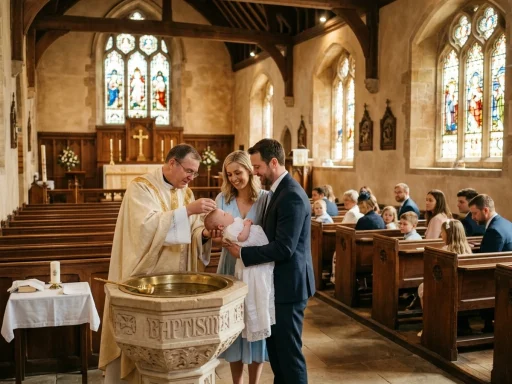
In the Roman Catholic Church, baptism is not merely a symbolic ceremony or a cultural rite of passage; it is the fundamental sacrament of initiation. It serves as the gateway to the spiritual life, the door which gives access to all the other sacraments. Through the waters of baptism, an individual is freed from original sin, reborn as a child of God, and incorporated into the Church, the mystical body of Christ. Because of the profound theological weight and spiritual gravity of this sacrament, the Catholic Church has established specific, universal requirements to ensure that the baptized individual—whether an infant, child, or adult—will be nurtured, educated, and raised within the Catholic faith.
Understanding the requirements for Catholic baptism is essential for parents and prospective godparents alike. These regulations are not arbitrary bureaucratic hurdles designed to create difficulty; rather, they are deeply pastoral safeguards. They exist to guarantee that the immense grace conferred in baptism is supported, protected, and allowed to flourish within a lived faith community. This comprehensive guide outlines the canonical, pastoral, and administrative requirements for Catholic baptism, detailing exactly what parents and sponsors need to know, navigating the complex rules surrounding godparent eligibility, the vital importance of proper preparation, and the administrative steps necessary to schedule this beautiful sacrament.
The journey toward the baptismal font is a time of profound spiritual reflection for a family. It is a moment to reaffirm one’s own faith commitments and to pledge to transmit the light of Christ to the next generation. Therefore, parishes universally require parents to engage deeply with the meaning of the sacrament, not simply to fulfill an obligation, but to embrace a divine calling.
This commitment is lifelong. When parents present their child for baptism, they take on the solemn responsibility of being the primary educators of their child in the ways of faith. The Church, in turn, commits to supporting the family through its pastoral ministries, its sacramental life, and its community of believers. The requirements we will discuss below are the framework through which this mutual commitment is formalized and lived out.
Code of Canon Law: Foundational Precepts (Canons 849–878)
The universal regulations regarding baptism are codified in the 1983 Code of Canon Law, specifically within Canons 849 through 878. These canons dictate the matter and form of the sacrament, the ordinary and extraordinary ministers of baptism, and the strict conditions under which it may be celebrated. Understanding these laws provides a necessary foundation for grasping the “why” behind parish policies.
According to Canon 867, parents are obliged to take care that infants are baptized in the first few weeks after birth. As soon as possible after the birth or even before it, they are to go to the pastor to request the sacrament for their child and to be prepared properly for it. This underscores the urgency and importance the Church places on bringing a child into the life of grace without unnecessary delay.
Furthermore, Canon 868 outlines the two essential conditions for the licit baptism of an infant: first, the parents or at least one of them or the person who legitimately takes their place must consent; and second, there must be a “founded hope” that the infant will be brought up in the Catholic religion. If such hope is altogether lacking, the baptism is to be delayed according to the prescripts of particular law after the parents have been advised about the reason. This specific canon is often the source of much discussion, as it requires a pastoral judgment on the part of the priest or deacon regarding the family’s actual lived faith.
These canonical foundations underscore the Church’s dual commitment to welcoming new members into the fold while simultaneously protecting the sanctity of the sacrament by ensuring it is celebrated in a context where the faith will actively be lived and transmitted. Baptism is a beginning, not an end, and Canon Law seeks to ensure that this beginning is built on a solid foundation of faith.
Detailed Requirements for Parents
Parish Registration and Active Participation
Before requesting a baptism, parents are generally required to be formally registered members of a Catholic parish. Parish registration is more than simply filling out a form or adding a name to a mailing list; it is a public declaration of intent to be part of a specific local faith community. Pastors need to know the families they are serving in order to shepherd them effectively. Active participation is usually demonstrated through regular attendance at Sunday Mass, contributing to the life of the parish through time and talent, and supporting the parish financially according to one’s means.
If parents wish to have their child baptized in a parish other than their own—perhaps the parish where they were married, or where grandparents currently worship—they typically must obtain a “Letter of Permission” from their proper pastor. This administrative step ensures good order, respects the pastoral jurisdiction of the home parish, and confirms that the parents are indeed active practicing Catholics who are simply seeking to celebrate the sacrament in a different location for family or historical reasons.
This registration requirement also helps establish a pastoral relationship between the family and the parish staff, which is crucial for the ongoing faith formation of the child, particularly as they approach the age for First Holy Communion and Confirmation.
Baptismal Preparation Classes (Catechesis)
To fulfill the obligation of proper preparation mentioned in Canon 867, parents—and often godparents, if they are local—are required to attend baptismal preparation classes. The purpose of these classes is not just to go over the logistics of the ceremony, but to delve into the theological meaning of the sacrament, the lifelong obligations it entails, and the practical aspects of raising a child in the Catholic faith in an increasingly secular modern world.
The length, structure, and format of these classes vary significantly by diocese and individual parish. Some parishes require a single evening session lasting a few hours, while others may mandate a multi-week course or an online learning module. These sessions offer a highly valuable opportunity for parents to reflect on their own faith journey, to connect with other young families in the parish who are in the same stage of life, and to truly understand the profound spiritual commitment they are making on behalf of their child.
During these sessions, topics typically covered include the history of baptism in the early Church, the scriptural basis for the sacrament, the theology of original sin and grace, the specific symbols used in the rite (water, chrism oil, the white garment, the baptismal candle), and practical advice for praying as a family and introducing a child to the mass.
The Necessity of Consent and a “Founded Hope”
As previously mentioned, Canon 868 strictly requires the consent of at least one parent for a baptism to proceed licitly. Furthermore, the pastor must have a “founded hope” that the child will be raised Catholic. This is a critical and sometimes challenging pastoral judgment. If parents are entirely alienated from the Church, do not attend Mass, show no intention of practicing the faith, and view the baptism merely as a cultural tradition or a superstitious protection, a pastor may decide to delay the baptism.
It is vital to understand that this delay is not a denial of the sacrament, nor is it a punishment. Rather, it is a pastoral pause designed to help the parents recognize their indispensable, non-transferable role as the primary educators of their child in the ways of faith. The Church cannot in good conscience baptize a child if there is absolute certainty that the child will never hear the Gospel preached or be brought to the Eucharist. During a delay, the pastor will typically work closely with the family to help them reconnect with their faith, perhaps encouraging them to start attending Mass regularly or participating in adult faith formation, until that “founded hope” can be established.
Qualifications and Rules for Godparents (Sponsors)
The Spiritual Role of the Sponsor
In the Catholic tradition, godparents (canonically referred to as sponsors) are not merely honorary titleholders, close friends of the family, or guardians designated in a legal will to care for the child in the event of the parents’ death. Their primary role is deeply, fundamentally spiritual. According to Canon 872, a sponsor is to present the child for baptism (along with the parents) and to help the baptized person lead a Christian life in keeping with baptism and to fulfill faithfully the obligations inherent in it.
The godparent is a representative of the wider Catholic community. They are meant to be a model of lived Catholic faith for the child, someone the child can look up to as they grow in their own understanding of the Gospel. They are tasked with praying for their godchild daily and being a constant source of spiritual encouragement.
Strict Canonical Requirements for Catholic Godparents
Because the sponsor represents the broader Catholic community and serves as a vital model of faith, the Code of Canon Law (Canon 874) lays out very specific, universal, and non-negotiable requirements for those who would assume this role. A person must fulfill all of the following conditions to be admitted as a Catholic sponsor:
- Age Requirement: The sponsor must be at least sixteen years of age. This ensures a level of maturity. However, the diocesan bishop can establish another age, or the pastor or minister can grant an exception for a just cause (e.g., a highly mature 15-year-old sibling).
- Fully Initiated Catholic: The sponsor must be a Catholic who has received all three Sacraments of Christian Initiation: Baptism, the Most Holy Eucharist, and Confirmation. This is essential, as one cannot sponsor someone into a life of faith that they themselves have not fully embraced.
- Practicing the Faith: They must lead a life of faith in keeping with the function to be taken on. This generally means attending Sunday Mass regularly, receiving the Eucharist and the Sacrament of Penance, and living a life in harmony with the teachings of the Church.
- Canonical Good Standing: They must not be bound by any canonical penalty legitimately imposed or declared. The most common application of this rule pertains to marriage: if a prospective godparent is married, their marriage must be recognized as valid by the Catholic Church (i.e., married in the Church or with a dispensation). A Catholic who is married outside the Church without permission is not in good standing to be a sponsor.
- Not the Parent: The sponsor cannot be the father or mother of the one to be baptized. The roles of parent and godparent are distinct and complementary.
Single vs. Couple Rules: How Many Godparents Can You Have?
Canon 873 clarifies the number of sponsors allowed. There is to be only one male sponsor or one female sponsor or one of each. It is not permitted to have two godfathers or two godmothers. While many cultural traditions encourage families to choose two sponsors, it is strictly required by the Church to have only one. If a family chooses two, they must be one man and one woman, reflecting the spiritual parenthood modeled by a mother and father.
The Christian Witness Exception
What if a family wishes to include a very close friend or relative who is a deeply committed, baptized Christian but not a Catholic? The Church, recognizing the value of shared Christian faith, makes a specific provision for this. While a non-Catholic cannot serve as a canonical godparent (sponsor) because they cannot fully represent the Catholic community or profess the entirety of the Catholic faith, a validly baptized person who belongs to a non-Catholic ecclesial community is permitted to participate as a “Christian witness” to the baptism (Canon 874 §2).
However, this is only allowed if there is also at least one fully qualified Catholic sponsor present. The Christian witness participates in the ceremony, and their name may be recorded in the register as a witness, but the Catholic sponsor bears the primary canonical responsibility. It is important to note that an unbaptized person (e.g., someone of the Jewish or Islamic faith, or an atheist) cannot serve as either a godparent or a Christian witness.
Required Documentation and Administrative Steps
Child’s Birth Certificate
Parishes absolutely require a copy of the child’s state-issued birth certificate before the baptism can be officially recorded. This ensures that the legal names, spelling, dates of birth, and parentage are recorded accurately in the permanent baptismal register of the parish. The baptismal record is a canonical legal document, and accuracy is paramount.
Godparent Certificates and Letters of Good Standing
To verify that godparents meet all the canonical requirements outlined above, they are typically required to obtain a “Letter of Good Standing” or a “Sponsor Certificate” from the pastor of the parish where they are currently registered and active. This document certifies that the pastor knows them to be practicing Catholics who have received the Sacraments of Initiation and are qualified to serve as a sponsor. They may also be asked to provide a physical copy of their own Confirmation certificate if the pastor requesting it needs further proof.
Donations and Stipends
It is a fundamental teaching of the Church that the sacraments are free gifts of God’s grace and absolutely cannot be bought or sold; to attempt to do so is the grave sin of simony. No one is ever denied a sacrament due to an inability to make an offering.
However, it is a long-standing custom and entirely appropriate to offer a free-will donation or stipend to the parish or the minister (priest or deacon) on the occasion of a baptism. This donation supports the ongoing ministry of the Church, helps cover administrative costs, lighting, heating, and the materials used in the sacrament. Typical donations range from $50 to $150, but families should give freely according to their means. The focus remains entirely on the spiritual grace being imparted.
Step-by-Step Baptism Checklist for Parents
To ensure a smooth and spiritually fruitful process, parents should follow this general, comprehensive checklist:
- Formally register as active members of your local Catholic parish.
- Contact the parish office to inquire about specific baptismal requirements, policies, and available dates.
- Carefully select qualified godparents who meet all canonical requirements (at least one must be a fully initiated, practicing Catholic in good standing).
- Have the chosen godparents request Sponsor Certificates or Letters of Good Standing from their home parishes well in advance.
- Register for and attend the required baptismal preparation catechesis class.
- Submit a copy of the child’s state-issued birth certificate to the parish office.
- Submit all godparent/sponsor documentation to the parish office before the deadline.
- Confirm the exact date and time of the baptism with the parish coordinator.
- Prepare a free-will donation for the parish or minister.
- Spend time in prayer as a family, preparing spiritually for this monumental day.
Comparison Table: Catholic Godparent vs. Christian Witness
Understanding the strict distinction between a canonical godparent and a Christian witness is crucial when selecting sponsors. This table summarizes the key differences for quick reference.
| Requirement / Role | Catholic Godparent (Sponsor) | Christian Witness |
|---|---|---|
| Baptism Status | Must be validly baptized in the Catholic Church | Must be a validly baptized Christian (non-Catholic) |
| Sacraments of Initiation | Must have received Eucharist and Confirmation | Not applicable |
| Age Requirement | At least 16 years old (unless exception granted) | Generally expected to be an adult |
| Canonical Good Standing | Strictly Required (e.g., valid Catholic marriage if married) | Not strictly bound by Catholic canon law |
| Role in the Church | Official, canonical representative of the Catholic community | Honorable witness to the sacrament |
| Is it Required? | Yes, at least one is strictly required for licit baptism | No, entirely optional and secondary |
Conclusion
The requirements for Catholic baptism reflect the immense dignity, power, and permanence of the sacrament. By asking parents to demonstrate a founded hope that their child will be raised in the faith, and by setting high, uncompromising standards for godparents, the Church acts out of profound love. It ensures that the newly baptized will be surrounded by a dedicated community of believers committed to their spiritual growth and well-being.
While gathering documents, attending classes, and navigating canonical rules may sometimes seem like burdensome administrative tasks, they are, in reality, profound pastoral steps. They prepare a family for the lifelong, joyous journey of discipleship that begins at the baptismal font. Baptism is the beginning of a life lived in Christ, and these requirements ensure that the journey starts on the firmest possible spiritual ground.
Frequently Asked Questions (FAQs)
Can I have two godmothers or two godfathers for my child?
No, you cannot. According to Canon 873 of the Code of Canon Law, you are permitted to have one godfather, one godmother, or one of each. It is strictly forbidden to have two godparents of the same sex.
Does a godparent absolutely have to be confirmed in the Catholic Church?
Yes. A canonical Catholic godparent must be fully initiated into the faith. This means they must have received the Sacrament of Baptism, the Most Holy Eucharist, and the Sacrament of Confirmation. There are no exceptions to this rule for a canonical sponsor.
Can an unbaptized person, such as a Jewish or Muslim friend, be a godparent?
No. An unbaptized person cannot serve as a Catholic godparent, nor can they serve as a Christian witness. To participate even as a Christian witness, the individual must be a validly baptized Christian. The role of a sponsor requires a shared faith in Christ.
How much does a Catholic baptism cost, and what is the typical donation?
The sacraments are strictly free and cannot be bought or sold. However, it is a standard practice and custom to offer a free-will donation or stipend to the parish or the officiating minister to support the church’s ministry. Typical donations range from $50 to $150, but no one is ever denied a baptism for financial reasons.
Get our latest guides, news, and insights highlighted in your Google Search & AI Overviews.