
✨ This article was AI edited. Editorial responsibility: BrooksideChurch.net.
Produced with AI. This article was artificially generated. Editorial responsibility: BrooksideChurch.net.
The Theological Foundations of Christadelphian Baptism
The Christadelphian faith holds a distinct and rigorous theological framework that deeply influences their practice of baptism. Unlike mainstream evangelical or liturgical traditions, Christadelphians do not practice infant baptism. Instead, they adhere strictly to credobaptism, or believer’s baptism. This practice is rooted in their understanding that baptism is an act of obedience that must follow a conscious, reasoned comprehension of the Gospel. For a Christadelphian, the Gospel is fundamentally bipartite: it consists of “the things concerning the Kingdom of God” and “the name of Jesus Christ” (Acts 8:12).
One of the core tenets of Christadelphian theology is the mortality of the soul. They believe that human beings do not possess an immortal soul that survives death; rather, death is a state of unconsciousness. Therefore, the only hope for eternal life is physical resurrection at the return of Jesus Christ. Baptism is the pivotal moment when an individual is metaphorically united with Christ’s death and resurrection. As the Apostle Paul writes in Galatians 3:27, “For as many of you as were baptized into Christ have put on Christ.” By going down into the water, the believer symbolically dies to their old life of sin and mortality. By rising from the water, they are born again to a new life in Christ, holding the hope of resurrection and participation in the coming Kingdom of God on Earth.
Furthermore, Christadelphians reject the orthodox doctrine of the Trinity. They believe that God the Father is the one supreme creator, and that Jesus Christ is His literal son, who had human nature and was tempted as we are, yet remained sinless. The Holy Spirit is understood not as a distinct person, but as the power or breath of God. This non-Trinitarian perspective inevitably influences the liturgy and the specific words spoken during the baptismal ceremony, prioritizing scriptural exactitude over traditional ecumenical formulas.
The Process: Interview and Examination of Faith
Before a baptism can occur, the candidate must undergo a thorough process of instruction and examination. Because Christadelphians emphasize the necessity of correct belief for salvation, a candidate is expected to have a solid grasp of scriptural doctrines. This period of instruction can last for several months or even years, during which the individual studies the Bible, often guided by Christadelphian literature such as “Christendom Astray” by Robert Roberts or “The Christadelphian Instructor.”
Once the candidate feels ready, they request baptism from their local ecclesia (the term Christadelphians use for their church congregations). The ecclesia will then appoint two or three examining brethren to interview the candidate. This interview is a solemn and critical part of the process. Its purpose is not to intimidate, but to lovingly ensure that the candidate truly understands the fundamental doctrines of the faith and is making an informed, lifelong commitment.
During the examination, the brethren will ask questions covering topics such as the nature of God, the nature of humanity, the promises made to Abraham and David, the sacrifice of Christ, the resurrection, and the coming Kingdom of God. They will also inquire about the candidate’s personal commitment to living a life transformed by the Gospel. Only upon a satisfactory examination will the brethren recommend to the ecclesia that the baptism should proceed. This rigorous prerequisite underscores the belief that baptism is invalid without prior comprehension of the Truth.
The Baptismal Ceremony: Liturgy and Spoken Words
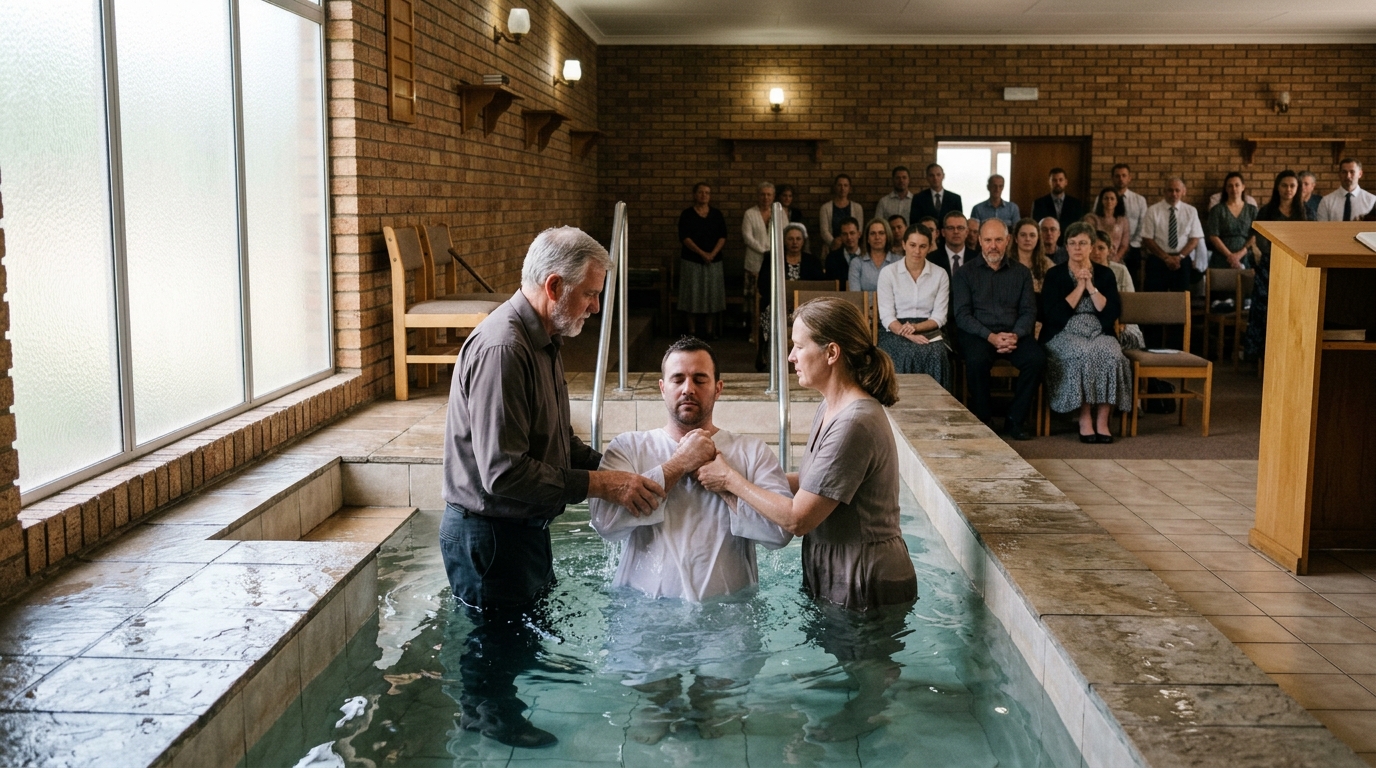
A Christadelphian baptismal service is typically characterized by simplicity, reverence, and a strict adherence to scriptural precedents. It lacks the ornate rituals, vestments, or elaborate liturgies found in some other Christian denominations. The focus is entirely on the act of immersion and its profound spiritual significance.
The ceremony is usually led by a presiding brother (Christadelphian ecclesias are entirely lay-led, with no paid clergy). The congregation gathers, often singing hymns of praise and dedication. Readings from the Scriptures are given, usually focusing on baptism, repentance, and the new life in Christ. The presiding brother will then give a brief exhortation, encouraging the candidate and reminding the congregation of their own baptismal vows.
The Public Confession
Before entering the water, the candidate is often asked to make a brief public confession of their faith. The presiding brother might ask a question such as:
“Brother [or Sister] [Name], do you believe the things concerning the Kingdom of God and the name of Jesus Christ, and is it your desire to be baptized into his saving name?”
The candidate replies affirmatively, confirming their belief and their voluntary submission to the ordinance.
The Words of Immersion
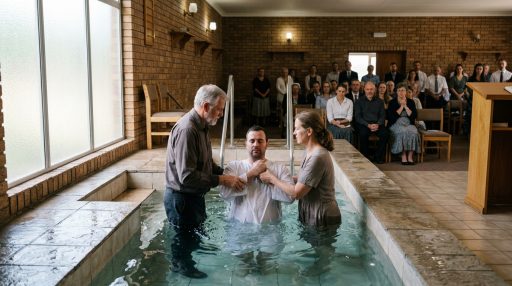
When it comes to the actual words spoken at the moment of immersion, there is some minor variation among Christadelphian ecclesias, though the core meaning remains identical. The brother performing the baptism (the baptizer) and the candidate enter the water. The baptizer typically raises one hand and speaks clearly so the congregation can hear.
A common formula, drawing directly from the Great Commission in Matthew 28:19, is:
“Upon your public confession of faith in the things concerning the Kingdom of God and the name of Jesus Christ, I baptize you in the name of the Father, and of the Son, and of the Holy Spirit. Amen.”
However, because Christadelphians are non-Trinitarian, they understand “the name of the Father, and of the Son, and of the Holy Spirit” not as a reference to a triune Godhead, but as an acknowledgment of God the Father, His Son Jesus Christ as the means of salvation, and the Holy Spirit as God’s operational power that inspired the Scriptures. Some ecclesias, to avoid any confusion with Trinitarianism or to align more closely with the accounts in the Book of Acts (e.g., Acts 2:38, Acts 8:16), prefer a simpler formula:
“Upon your confession of faith, I baptize you into the name of the Lord Jesus Christ for the remission of sins. Amen.”
Following these words, the candidate is completely immersed in the water. Total immersion is considered absolutely necessary, as it visually represents burial with Christ (Romans 6:4). Pouring or sprinkling is not accepted as valid baptism.
Post-Baptismal Prayer and the Breaking of Bread
Immediately after the immersion, the newly baptized brother or sister is welcomed out of the water. There is often a profound sense of joy and spiritual relief within the congregation. The presiding brother or another appointed brother will then offer a prayer of thanksgiving and dedication. This prayer thanks God for the new life that has begun, asks for His continued guidance and forgiveness, and prays that the new member will remain faithful until the return of Christ.
Following the baptism, it is a common practice (though not strictly mandatory on the exact same day) for the new member to participate in the Breaking of Bread (the Lord’s Supper) for the first time. The Breaking of Bread is the central act of worship for Christadelphians, held every Sunday. By partaking of the bread and wine, the newly baptized individual visibly demonstrates their new fellowship with Christ and with the ecclesia. They are now considered a full member of the community, bearing the title “Brother” or “Sister.”
The ecclesia also extends the “Right Hand of Fellowship” to the new member. This is a formal, yet deeply emotional, welcoming gesture where the brethren and sisters shake the hand of the newly baptized, symbolizing their acceptance, love, and shared commitment to the Truth. The new member is now formally considered part of the spiritual family, sharing in the same hope of the coming Kingdom.
Comparison with Mainstream Evangelical Practice
While mainstream evangelical Christians also practice believer’s baptism by immersion, the theological underpinnings and the specific liturgy differ significantly from Christadelphian practice.
- Theological Prerequisites: Evangelicals typically require a simple confession of faith in Jesus as Lord and Savior (often termed “accepting Jesus into one’s heart”). Christadelphians require a comprehensive understanding of specific doctrines (the mortality of the soul, the promises to Abraham, the non-Trinitarian nature of God) before baptism is permitted.
- The Formula: Evangelicals almost universally use the Trinitarian formula (“Father, Son, and Holy Spirit”) with a Trinitarian understanding. Christadelphians use it with a unitary understanding or opt for the “Jesus Name” formula to avoid theological ambiguity.
- Clergy vs. Laity: Evangelical baptisms are usually performed by ordained pastors or ministers. Christadelphian baptisms are performed by lay brethren appointed by the local ecclesia.
- The Purpose: For many evangelicals, baptism is an outward sign of an inward grace already received—a public testimony of a salvation that occurred at the moment of belief. For Christadelphians, baptism is an integral, necessary step in the process of salvation itself; it is the moment when sins are washed away and the individual is officially “in Christ.”
Frequently Asked Questions
Is rebaptism required if someone joins the Christadelphians from another denomination?
Yes, almost always. Because Christadelphians believe that correct doctrine is essential for a valid baptism, a baptism performed in a denomination that holds to doctrines they consider erroneous (such as the Trinity or immortal soul) is not recognized. The individual must be interviewed and baptized anew.
Can anyone perform a Christadelphian baptism?
Typically, a baptized brother in good standing is appointed by the ecclesia to perform the immersion. The focus is on the authority of the ecclesia acting collectively, rather than any special priestly authority of the individual baptizer.
What happens if a person is physically unable to be fully immersed?
Total immersion is a strict requirement. If a person is elderly or severely disabled, extreme care is taken to assist them into the water (sometimes using hoists or specialized pools). Only in the most extraordinary circumstances, where immersion is physically impossible without endangering life, would the ecclesia face a difficult pastoral dilemma, though the doctrinal necessity of immersion remains paramount.
Get our latest guides, news, and insights highlighted in your Google Search & AI Overviews.