
✨ This article was AI edited. Editorial responsibility: BrooksideChurch.net.
Produced with AI. This article was artificially generated. Editorial responsibility: BrooksideChurch.net.
What Is Sacred Chrism? The Holy Anointing Oil in Baptism and Christian Sacraments
Understanding the Composition and Consecration
The use of anointing oil is deeply woven into the fabric of Christian tradition, tracing its origins back to the ancient practices of the Old Testament. Sacred Chrism, derived from the Greek word ‘chrisma’ meaning anointing, is not merely a symbolic substance; it is a profound sacramental sign of the Holy Spirit’s presence and action within the life of a believer. When a person is anointed with this sacred oil, they are visibly marked as belonging to Christ, participating in His divine mission as priest, prophet, and king. This anointing is a permanent spiritual seal, a transformative encounter that equips the faithful for their spiritual journey and vocation within the Church.
Understanding the composition and consecration of Sacred Chrism is essential to grasping its theological significance. The oil itself is a carefully prepared mixture of pure olive oil and balsam, a fragrant resin extracted from specific trees. The olive oil represents strength, healing, and the abundance of God’s grace, while the balsam provides a sweet aroma, symbolizing the ‘odor of sanctity’ and the beauty of a virtuous Christian life. This unique combination sets Sacred Chrism apart from the other holy oils used in the Church, such as the Oil of Catechumens and the Oil of the Sick.
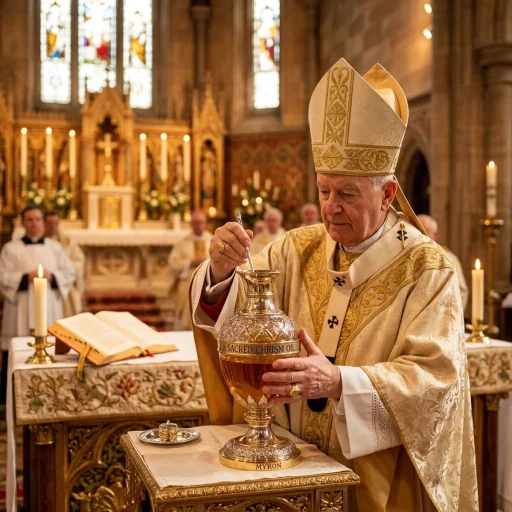
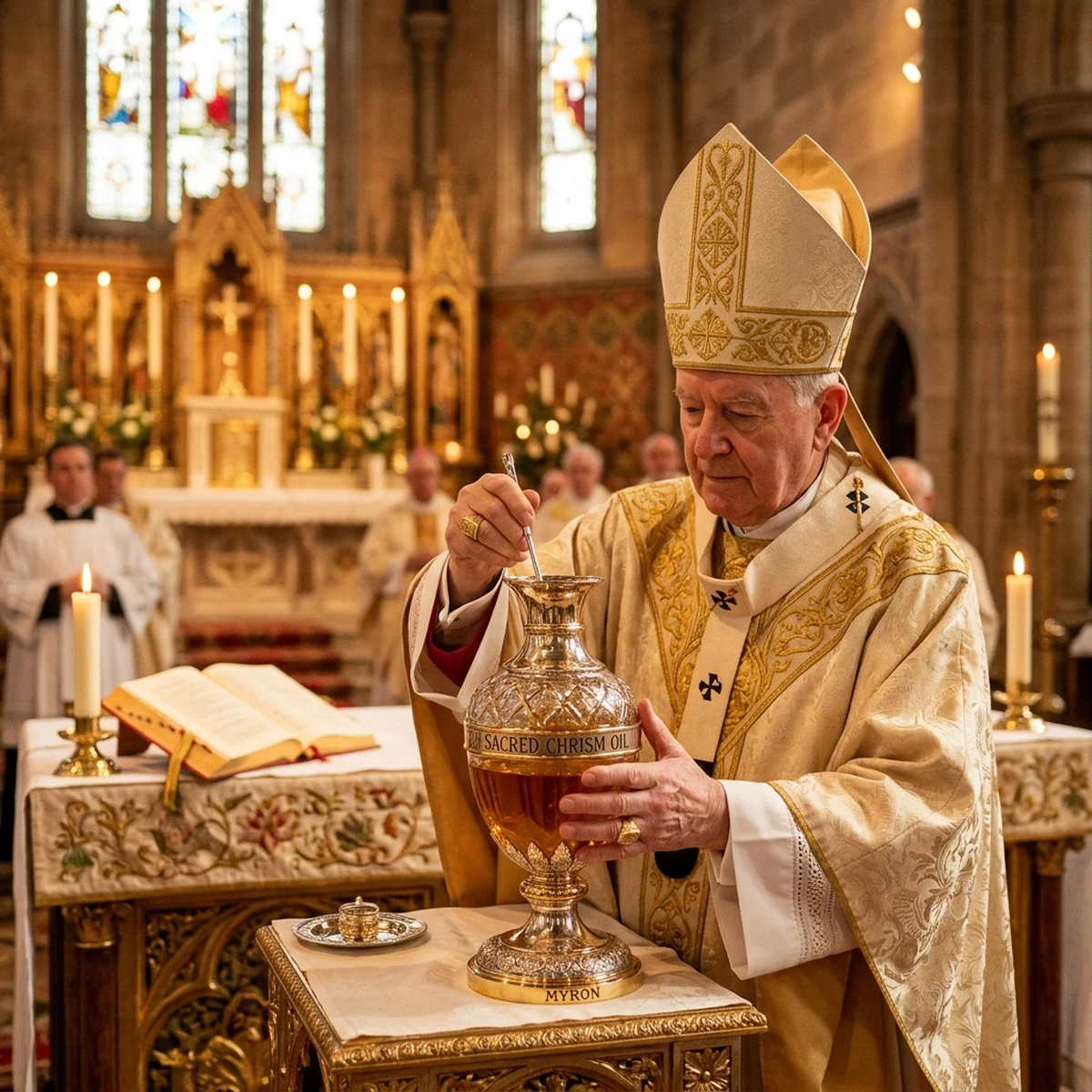
The consecration of Sacred Chrism is a highly solemn and significant liturgical event. It takes place annually during the Chrism Mass, typically celebrated on the morning of Holy Thursday. The diocesan bishop gathers with the priests of the diocese to bless the oils. During the consecration of the Chrism, the bishop breathes over the vessel containing the oil, a gesture reminiscent of Christ breathing the Holy Spirit upon the apostles. This powerful invocation of the Holy Spirit transforms the oil into a vessel of grace, ready to be distributed to parishes for use throughout the liturgical year.
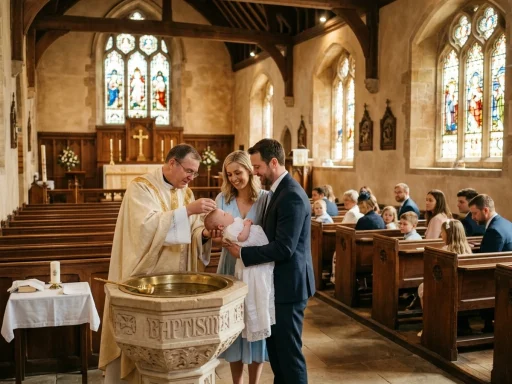
In the sacrament of Baptism, Sacred Chrism plays a pivotal role in the post-baptismal rites. After the primary act of baptizing with water, the newly baptized individual is anointed on the crown of the head with Chrism. This anointing signifies their incorporation into the body of Christ and their share in His priestly, prophetic, and royal office. It is a moment of profound spiritual elevation, marking the transition from the old life of sin to the new life of grace in Christ. The fragrance of the oil serves as a tangible reminder of the joy and beauty of this new creation.
The significance of Sacred Chrism is further magnified in the sacrament of Confirmation. Here, the anointing with Chrism is the essential rite of the sacrament itself. The bishop (or a delegated priest) traces the sign of the cross on the forehead of the confirmand, declaring, ‘Be sealed with the gift of the Holy Spirit.’ This anointing completes the grace of Baptism, enriching the individual with a special strength of the Holy Spirit to witness to Christ in the world. The seal of Confirmation is indelible, marking the soul permanently and equipping the believer for active participation in the Church’s mission.
The Role of Chrism in the Sacraments
Beyond Baptism and Confirmation, Sacred Chrism is integral to the sacrament of Holy Orders. When a man is ordained to the priesthood, his hands are anointed with Chrism, signifying his consecration to offer the Eucharistic sacrifice and to minister the sacraments to the faithful. In the ordination of a bishop, his head is anointed, symbolizing the outpouring of the Holy Spirit that equips him for his role as a shepherd and teacher of the flock. These anointings are profound expressions of the Church’s belief in the transformative power of the Holy Spirit working through the ordained ministry.
The use of Sacred Chrism also extends to the dedication of churches and altars. When a new church building is consecrated, the walls and the altar are anointed with Chrism. This act sets the building and the altar apart for divine worship, signifying that they are holy places where God dwells among His people. The fragrance of the Chrism fills the sacred space, creating an atmosphere of reverence and awe, inviting the faithful to enter into the mystery of God’s presence. It is a beautiful reminder that the physical structures of the Church are meant to point us toward the spiritual realities of the heavenly kingdom.
The biblical roots of anointing with oil are rich and multifaceted. In the Old Testament, oil was used to consecrate priests, kings, and prophets. Exodus 30:22-33 provides detailed instructions for the preparation of the holy anointing oil, emphasizing its sacred character and the strict prohibition against its misuse. Psalm 133 beautifully describes the unity of God’s people as being like ‘precious oil poured on the head, running down on the beard, running down on Aaron’s beard, down on the collar of his robe.’ This imagery highlights the anointing as a source of blessing, unity, and spiritual abundance.
In the New Testament, the concept of anointing is spiritualized and intimately connected to the Holy Spirit. 1 John 2:20 declares, ‘But you have an anointing from the Holy One, and all of you know the truth.’ This passage underscores the reality that all believers, through their baptism and confirmation, share in the anointing of Christ. They are empowered by the Holy Spirit to discern the truth, to live holy lives, and to bear witness to the Gospel in a world that desperately needs the light of Christ. The physical anointing with Sacred Chrism is a tangible expression of this profound spiritual reality.
A comparative understanding of Sacred Chrism across different Christian traditions reveals both shared heritage and distinct theological nuances. In the Catholic Church, Chrism is central to Baptism, Confirmation, and Holy Orders, emphasizing the indelible seal of the Holy Spirit. The Eastern Orthodox Church uses ‘Myron,’ a highly complex mixture of over forty ingredients, which is consecrated by the Patriarch and distributed to the local churches. The anointing with Myron, known as Chrismation, is administered immediately after Baptism, emphasizing the inseparable unity of the two sacraments in the Christian initiation process.
Comparative Matrix: Views on Holy Anointing Oil
| Tradition | Name Used | Role in Sacraments | Consecration |
|---|---|---|---|
| Catholic Church | Sacred Chrism | Baptism, Confirmation, Holy Orders, Dedications | By the Bishop during Chrism Mass |
| Eastern Orthodox | Holy Myron | Chrismation (immediately after Baptism) | By the Patriarch |
| Anglican Church | Chrism | Baptism, Confirmation (varies) | By the Bishop |
| Protestant | Anointing Oil | Healing, Consecration (not generally a sacrament) | Varies, often by Pastor |
Biblical Roots and Theological Significance
In the Anglican tradition, the use of Chrism is also practiced, particularly in Baptism and Confirmation, though the specific theological emphasis may vary among different provinces and parishes. It is often seen as a significant symbolic act that deepens the believer’s connection to the universal Church and the grace of the Holy Spirit. Among Protestant denominations, the use of anointing oil is less uniform. While some traditions, particularly those with Pentecostal or Charismatic leanings, may use oil for healing or consecration, it is generally not considered a sacrament in the same way as it is in the Catholic and Orthodox traditions.
The fragrance of Sacred Chrism is a powerful sensory element that deepens the sacramental experience. Balsam, the sweet-smelling resin mixed with the olive oil, has been prized since antiquity for its aromatic properties. In the context of the liturgy, this fragrance serves as a reminder of the ‘odor of sanctity’—the spiritual beauty and attractiveness of a life lived in union with Christ. When the faithful encounter the scent of Chrism, they are invited to reflect on the joy and dignity of their Christian vocation, and to strive to be a pleasing fragrance to God in all that they do.
The practice of anointing with oil is also profoundly connected to the concept of healing, both physical and spiritual. While the Oil of the Sick is specifically designated for the anointing of those who are ill, the underlying symbolism of oil as a source of comfort, strength, and restoration is present in all the holy oils. Sacred Chrism, in particular, signifies the healing of the soul from the wounds of sin and the infusion of divine grace that empowers the believer to overcome spiritual obstacles and to grow in holiness. It is a tangible sign of God’s abiding love and His desire for our wholeness.
In the context of the modern world, the use of Sacred Chrism may seem like an ancient and mysterious practice. However, its enduring significance lies in its ability to communicate profound theological truths through tangible, sensory means. In a culture that often prioritizes the material over the spiritual, the sacraments serve as powerful reminders of the unseen reality of God’s grace at work in our lives. The anointing with Chrism is a physical manifestation of a spiritual seal, a visible sign of an invisible reality that shapes our identity and our destiny as children of God.
The theology of the seal (sphragis) is central to understanding the significance of Sacred Chrism. This concept, deeply rooted in early Christian thought, emphasizes that the anointing marks the soul with an indelible character, setting the individual apart for God. Just as a wax seal authenticated a document in the ancient world, the seal of the Holy Spirit authenticates the believer as a genuine follower of Christ. This seal provides spiritual protection and guarantees the promise of future glory, provided the believer remains faithful to their baptismal promises and cooperates with God’s grace.
The Enduring Legacy of the Seal
The Chrism Mass, where the oils are consecrated, is a beautiful expression of the unity of the local Church around its bishop. It is a moment of profound communion, as priests gather from across the diocese to concelebrate the Eucharist and to witness the blessing of the oils that they will use in their respective parishes throughout the year. This annual gathering serves as a powerful reminder that the sacraments are not isolated events but are deeply embedded in the life of the ecclesial community, drawing their efficacy from the unity of the Church and the authority of the bishop as the successor of the apostles.
The meticulous care taken in the preparation and distribution of Sacred Chrism reflects the profound reverence the Church holds for this holy substance. The oil is typically kept in a special vessel, known as a chrismatory, which is often beautifully adorned and securely stored in the ambry, a prominent niche or cabinet in the sanctuary of the church. This careful handling underscores the sacredness of the oil and ensures that it is treated with the utmost respect and devotion, honoring the presence of the Holy Spirit that it signifies and conveys.
The historical evolution of the use of Chrism is a fascinating journey through the centuries of Christian tradition. From its early origins in the practices of the ancient Church to its formalized role in the medieval sacramental system, the theology and practice of anointing have undergone significant development. However, the core conviction remains unchanged: that God uses the simple elements of creation, such as oil and fragrance, to communicate His divine grace and to transform the lives of His people. The continued use of Sacred Chrism is a testament to the enduring power of these ancient symbols to speak to the human heart.
As we reflect on the profound mystery of Sacred Chrism, we are invited to renew our appreciation for the gift of the Holy Spirit in our lives. The anointing we received at Baptism and Confirmation is not a static reality but a dynamic force that calls us to ongoing conversion and spiritual growth. It is a source of strength in times of trial, a wellspring of joy in moments of celebration, and a constant reminder of our high calling as children of God. May the fragrance of Christ continue to permeate our lives, drawing others to the beauty and truth of the Gospel.
In conclusion, Sacred Chrism is far more than a mere symbol; it is a vital conduit of God’s grace, a tangible expression of the Holy Spirit’s transforming power. From its biblical roots to its central role in the sacraments of Christian initiation and Holy Orders, the anointing with Chrism is a profound testament to the Church’s belief in the physical mediation of spiritual realities. By understanding its composition, consecration, and theological significance, we can deepen our appreciation for the rich sacramental life of the Church and the incredible gift of God’s presence among us.
Frequently Asked Questions
- What is Sacred Chrism? Sacred Chrism is a holy anointing oil made of olive oil mixed with sweet balsam, consecrated by a bishop and used in the sacraments of Baptism, Confirmation, and Holy Orders.
- What does the word ‘chrism’ mean? The word ‘chrism’ is derived from the Greek word ‘chrisma’, which translates to ‘anointing’.
- When is Sacred Chrism consecrated? Sacred Chrism is consecrated annually by the diocesan bishop during the Chrism Mass, typically held on the morning of Holy Thursday.
Get our latest guides, news, and insights highlighted in your Google Search & AI Overviews.