
✨ This article was AI edited. Editorial responsibility: BrooksideChurch.net.
Produced with AI. This article was artificially generated. Editorial responsibility: BrooksideChurch.net.
Lutheran beliefs about baptism center on its designation as a sacred Sacrament and physical Means of Grace through which the Holy Spirit delivers the forgiveness of sins, redeems from spiritual death, and grants eternal salvation to all who believe, uniting earthly water with God word and divine promise.
The Core Theological Foundations of Lutheran Baptism
Within confessional Lutheran theology, holy baptism is not merely an outward human work, symbol, or public declaration of personal piety. Rather, as articulated by Martin Luther in the Small Catechism and formal Lutheran confessions such as the Augsburg Confession (Confessio Augustana, 1530), baptism is an objective act of God. It is a holy Sacrament instituted directly by Jesus Christ in the Great Commission (Matthew 28:19-20), where divine grace is communicated through earthly elements.
Lutherans understand sacraments through three indispensable criteria: they are commanded by Christ, they utilize an earthly physical element (in this case, water), and they carry the explicit promise of the forgiveness of sins and eternal life. When water is applied in the name of the Father, the Son, and the Holy Spirit, it becomes a life-giving water, rich in grace, and a washing of the new birth in the Holy Spirit (Titus 3:5).
Baptism as a Means of Grace (Gratia Dei)
The doctrine of the Means of Grace (Media Gratiae) is foundational to Lutheran soteriology. Lutherans believe that God does not distribute His saving grace through unmediated mystical experiences or subjective emotional impressions. Instead, God channels His unearned, justifying grace through concrete, tangible means: the Proclaimed Word of the Gospel, Holy Absolution, Holy Communion, and Holy Baptism.
In his Large Catechism (1529), Martin Luther forcefully argued against both the Roman Catholic scholastic view of automatic mechanical efficacy (ex opere operato without faith) and the radical Anabaptist view that reduced baptism to an empty ceremonial token. Luther insisted that the power, effect, benefit, fruit, and purpose of Baptism is to save, delivering believers from sin, death, and the devil, and bringing them into the eternal kingdom of Christ.
Paedobaptism: Why Lutherans Baptize Infants
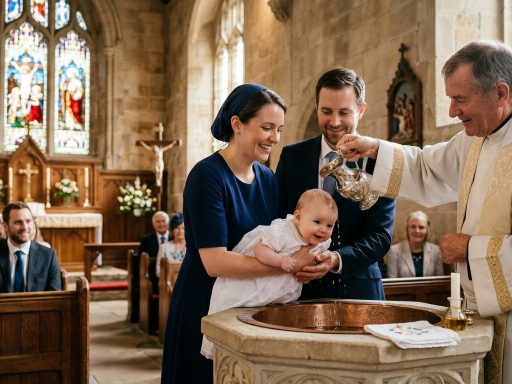
Infant baptism (paedobaptism) is a hallmark of Lutheran sacramental practice. Article IX of the Augsburg Confession explicitly affirms: Of Baptism they teach that it is necessary to salvation, and that through Baptism is offered the grace of God; and that children are to be baptized who, being offered to God through Baptism, are received into Gods grace.
The biblical and theological rationale for baptizing infants rests upon several key pillars:
- Universal Original Sin: Scripture teaches that every human being is conceived and born in sin (Psalm 51:5; Romans 5:12). Because infants participate in the fallen condition of humanity and inherit spiritual mortality, they stand in immediate need of the redeeming grace, forgiveness, and cleansing found in Christ.
- The Universal Promise: On the Day of Pentecost, the Apostle Peter declared: Repent and be baptized every one of you in the name of Jesus Christ for the forgiveness of your sins… For the promise is for you and for your children and for all who are far off (Acts 2:38-39).
- Christ Welcome of Children: Jesus explicitly welcomed infants and little children, stating that the Kingdom of God belongs to such as these (Luke 18:15-17; Mark 10:14).
- Infant Faith (Fides Infantium): Lutherans maintain that the Holy Spirit is fully capable of creating genuine faith in an infants heart through the power of the Word in baptism, just as John the Baptist leapt for joy in Elizabeths womb in the presence of Jesus (Luke 1:41). Infant baptism represents the purest example of Sola Gratia (Grace Alonf), where the recipient is completely passive and contributes nothing of their own merit.
The Mode and Liturgy of Lutheran Baptism
While the Greek root baptizo historically indicates washing or immersion, Lutheran theology does not mandate total bodily immersion as the only valid mode. In Lutheran practice, the valid administration of baptism requires pure water combined with the Trinitarian formula spoken by the minister: I baptize you in the name of the Father, and of the Son, and of the Holy Spirit.
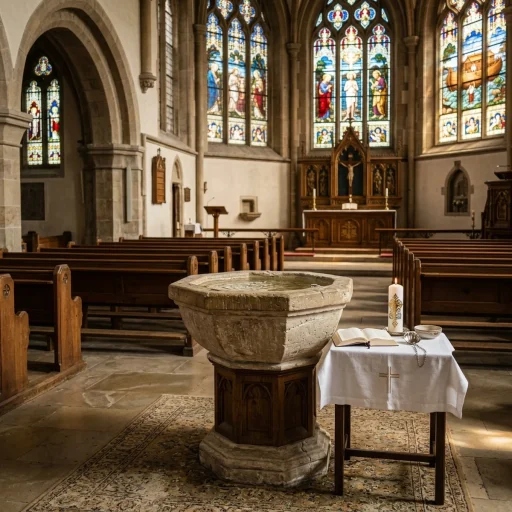
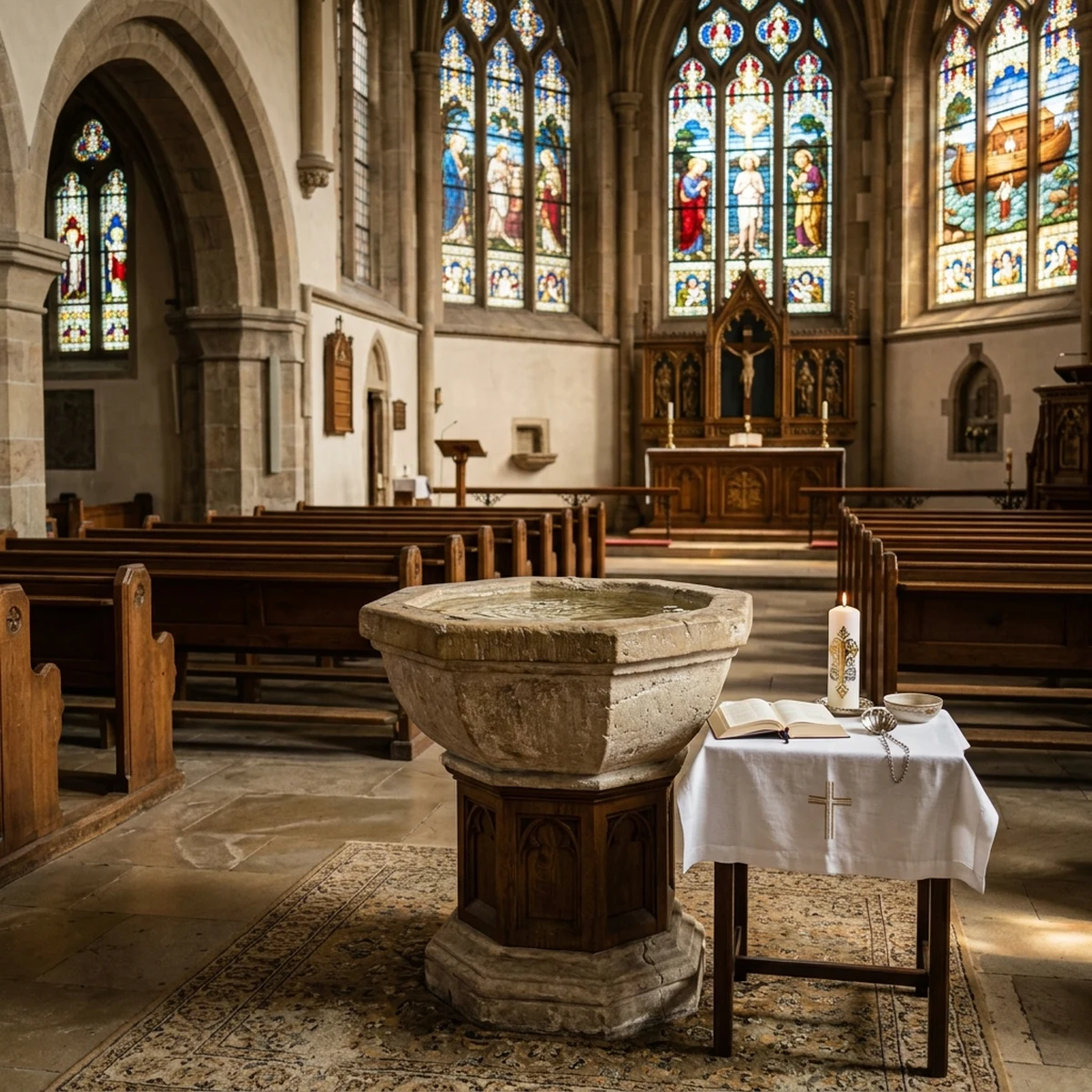
The ceremony typically involves pouring (affusion) or sprinkling (aspersion) water three times over the head of the candidate at the baptismal font. In historic Lutheran liturgies, the rite includes:
- The Sign of the Cross placed on the forehead and heart marking the candidate as one redeemed by Christ the Crucified.
- The Renunciation of the devil, all his works, and all his empty ways.
- The Confession of the Apostles Creed by sponsors, parents, and the congregation.
- The Baptismal Washing with water in the Triune Name.
- The Laying on of Hands and Pastoral Blessing for the gift of the Holy Spirit.
- The Presentation of the Baptismal Candle and White Garment, symbolizing the light of Christ and the robe of Christs righteousness (Galatians 3:27).
The Relationship Between Faith and Baptism
A common critique of sacramental theology is the question: Does water itself save, or does faith save? Luther addressed this directly in the Small Catechism: Certainly not just water, but the word of God in and with the water does these things, along with the faith which trusts this word of God in the water. For without Gods word the water is plain water and no Baptism. But with the word of God it is a Baptism, that is, a life-giving water, rich in grace, and a washing of the new birth in the Holy Spirit.
Baptism is an objective, unbreakable covenant established by God. However, its saving benefits must be received and apprehended by faith. If a baptized person later rejects Christ through persistent unbelief, they forfeit the salvation offered in baptism. Conversely, the efficacy of the sacrament does not depend on the worthiness or emotional state of the minister or the baptized person; it rests solely upon the promise of God.
Daily Remembrance: Drowning the Old Adam
In Lutheran spirituality, baptism is an ongoing daily reality that shapes Christian identity throughout life. Martin Luther taught that by daily contrition and repentance, the Old Adam is drowned and dies with all sins, and daily a new person arises to live before God in righteousness forever (Romans 6:3-4).
Comparative Theological Overview
| Tradition | Nature of Baptism | Efficacy / Regeneration | Subjects | Mode |
|---|---|---|---|---|
| Lutheran | Sacrament & Means of Grace | Delivers forgiveness, creates faith, gives Holy Spirit | Infants & Believing Adults | Affusion, Immersion, or Aspersion |
| Roman Catholic | Sacrament (Ex Opere Operato) | Infuses sanctifying grace, removes original sin guilt | Infants & Adults | Affusion or Immersion |
| Reformed | Covenant Sign & Seal | Sign of covenant inclusion; regeneration sovereign | Infants of believers & Adults | Sprinkling or Pouring |
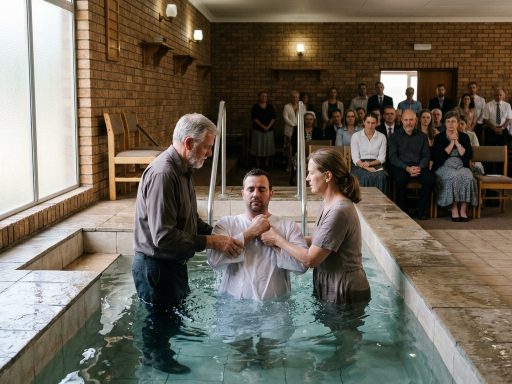
| Baptist | Symbolic Ordinance | Outward symbol of prior salvation (no regeneration) | Credobaptism (believers only) | Full Immersion only |
Pastoral Questions & Answers Regarding Lutheran Baptism
Does the Lutheran Church recognize baptisms performed in other Christian denominations?
Yes. The Lutheran Church recognizes any baptism that was administered with water in the name of the Father, Son, and Holy Spirit. Lutherans do not re-baptize individuals who were previously baptized in other Christian traditions.
What is the role of godparents and sponsors in Lutheran baptism?
In Lutheran practice, sponsors bear the sacred responsibility of praying for the child, witnessing the baptism, and assisting parents in nurturing the child in the Christian faith.
Can someone be saved without baptism in Lutheran theology?
Lutherans make a crucial distinction between the necessity of the sacrament and unbelief: It is not the lack of baptism that condemns, but the contempt of baptism. When an unbaptized believer dies before baptism can be administered, Gods saving grace is fully present through faith in the Gospel.
Get our latest guides, news, and insights highlighted in your Google Search & AI Overviews.