
✨ This article was AI edited. Editorial responsibility: BrooksideChurch.net.
Produced with AI. This article was artificially generated. Editorial responsibility: BrooksideChurch.net.
The Biblical Foundations of Infant Baptism
The practice of infant baptism in the Lutheran tradition is deeply rooted in Scripture and the historical practices of the early Christian church. Unlike traditions that view baptism solely as an outward symbol of an inward decision, Lutheran theology understands baptism as a profound Means of Grace. This means that God is the primary actor in the sacrament, actively bestowing grace, forgiveness, and the Holy Spirit upon the baptized, regardless of their age or intellectual capacity.
In the New Testament, we see multiple instances of entire households being baptized. For example, in Acts 16, both Lydia and the Philippian jailer have their “whole households” baptized by the apostles. The Lutheran Church interprets “households” to include children and infants, mirroring the Old Testament covenant of circumcision, which was administered to eight-day-old infants (Colossians 2:11-12). Just as circumcision brought infants into the covenant of Israel, baptism brings infants into the New Covenant of Christ.
Furthermore, Jesus explicitly commands His disciples to “let the little children come to me, and do not hinder them, for the kingdom of God belongs to such as these” (Mark 10:14). Lutherans take this command seriously, believing that infants are not only capable of receiving God’s grace but are in desperate need of it due to original sin.
Sola Gratia (Grace Alone) and Baptism
At the very heart of the Lutheran Reformation is the doctrine of Sola Gratia, or Grace Alone. This theological pillar asserts that salvation is a free gift from God, entirely unearned and unmerited by human effort or intellect. Infant baptism is perhaps the most profound physical expression of Sola Gratia.
When an infant is brought to the baptismal font, they bring nothing of their own to the table. They cannot articulate a statement of faith, they cannot understand complex theological doctrines, and they cannot promise to live a holy life. They are completely helpless. It is in this helplessness that God’s grace shines brightest. God reaches down and claims the child as His own, washing away the stain of original sin and planting the seed of faith through the working of the Holy Spirit. If baptism required intellectual comprehension or a conscious decision, it would cease to be entirely of grace and would become a work of human effort.
The Means of Grace: Water and the Word
In Lutheran theology, a sacrament must possess three distinct characteristics: it must be commanded by Christ, it must use a physical element, and it must offer the forgiveness of sins. Baptism meets all three criteria.
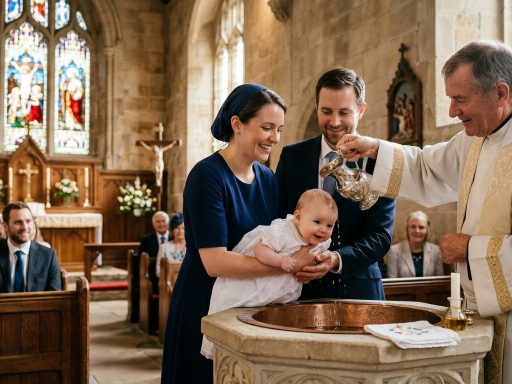
Martin Luther, in his Small Catechism, asks, “What is Baptism?” He answers, “Baptism is not just plain water, but it is the water included in God’s command and combined with God’s word.” The power of baptism does not reside in the water itself, which is ordinary water, but in the Word of God connected to the water. When the pastor pours the water over the infant’s head and speaks the words instituted by Christ—”I baptize you in the name of the Father, and of the Son, and of the Holy Spirit”—God is fulfilling His promise to save and renew.
Martin Luther’s Small Catechism on Baptism
Martin Luther placed immense importance on the daily remembrance of one’s baptism. In the Small Catechism, which remains a foundational instructional text for Lutherans today, Luther details the immense benefits of baptism. He writes that baptism “works forgiveness of sins, rescues from death and the devil, and gives eternal salvation to all who believe this, as the words and promises of God declare.”
For Luther, baptism was not a one-time past event but a daily reality. He encouraged Christians to remember their baptism daily, meaning that the old, sinful nature is drowned and dies through daily sorrow and repentance, and a new person emerges to live before God in righteousness and purity forever. For an infant, this lifelong journey of faith begins at the font and is nurtured over a lifetime within the community of the church.
The Baptismal Font Liturgy
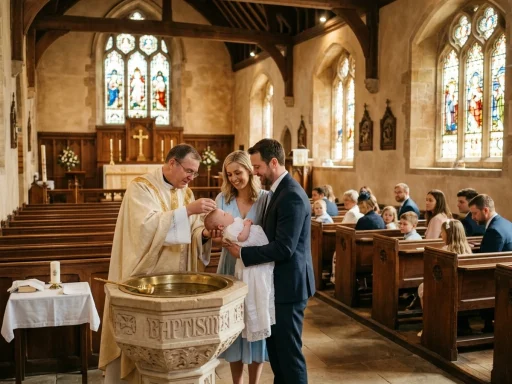
The liturgy of a Lutheran infant baptism is a rich, symbolic, and deeply communal event. It typically takes place during the regular Sunday worship service, emphasizing that the child is being welcomed into the gathered body of Christ.
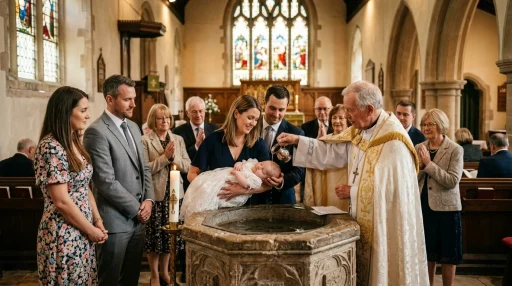
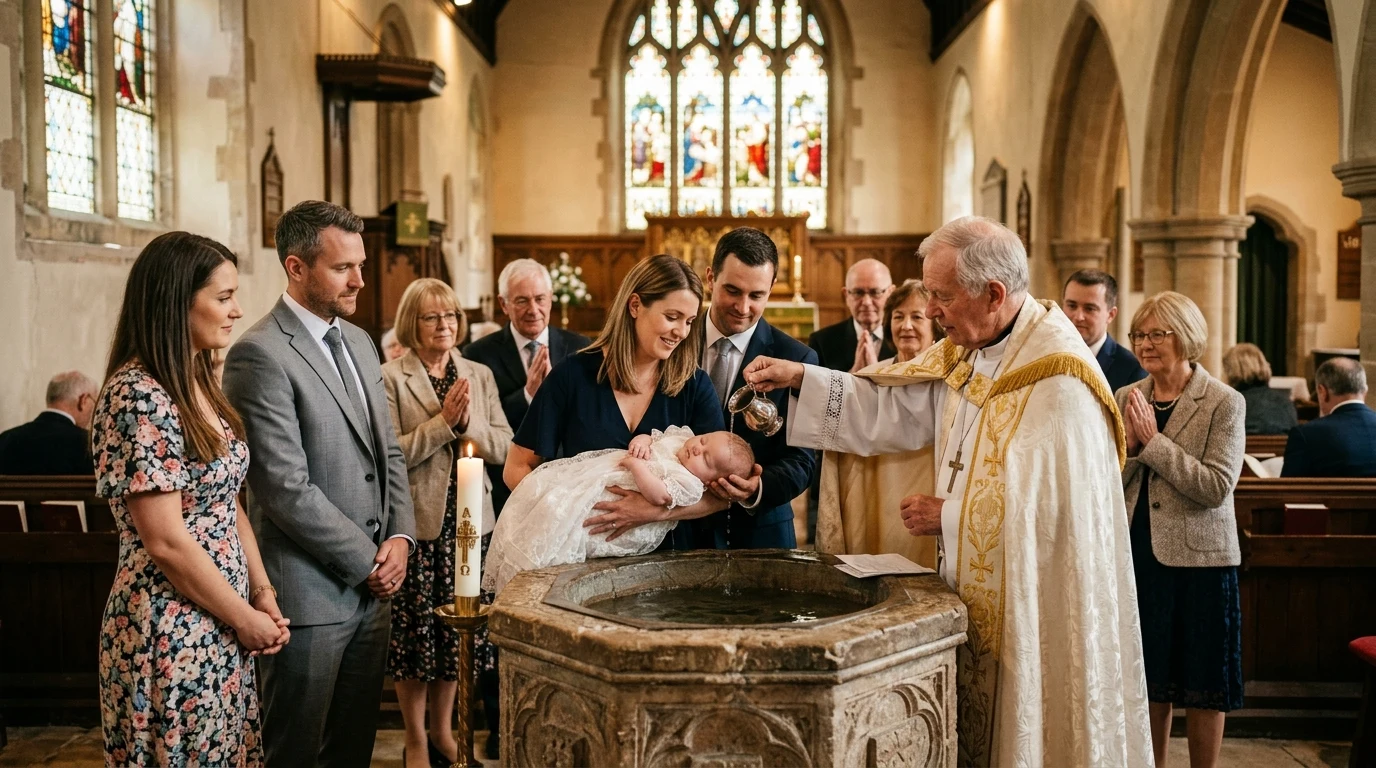
The rite often begins with the pastor addressing the parents and sponsors, asking them if they desire to have the child baptized into the Christian faith. The congregation then joins in professing the Apostles’ Creed, stating the faith into which the child is being baptized. The pastor then applies water to the child’s head, typically three times, invoking the Triune God.
Following the water application, the pastor may trace the sign of the cross on the child’s forehead and heart, marking them as one redeemed by Christ. A baptismal candle is often lit from the Paschal (Easter) candle and presented to the family with the words, “Let your light so shine before others that they may see your good works and glorify your Father in heaven.” This beautiful liturgy visually and verbally reinforces the profound theological realities occurring at the font.
Sponsors and Godparents: Duties and Responsibilities
In the Lutheran Church, the roles of sponsors or godparents are taken very seriously. They are not merely honorary titles given to close friends or family members; they are deeply spiritual commitments.
During the baptismal liturgy, sponsors are asked to make specific promises on behalf of the infant. They promise to pray for the child, to help the parents bring the child up in the Christian faith, to encourage the child’s participation in the life of the church, and to help ensure the child receives instruction in the Ten Commandments, the Creed, and the Lord’s Prayer.
Essentially, sponsors serve as spiritual mentors and representatives of the broader Christian community. They are tasked with supporting the parents in the daunting but beautiful task of raising a child to know and love the Lord. Because of this significant spiritual responsibility, Lutheran churches typically require that at least one, if not all, sponsors be baptized and practicing Christians.
Comparing Infant Baptism: Lutheran vs. Other Traditions
To fully understand the Lutheran perspective on infant baptism, it is helpful to compare it with other Christian traditions.
| Feature | Lutheran Church | Baptist / Believer’s Baptism | Roman Catholic Church |
|---|---|---|---|
| Primary Actor | God (Means of Grace) | The individual (Act of obedience) | God (Infusion of grace) |
| Appropriate Age | Infants and Adults | Adults and older children (Age of reason) | Infants and Adults |
| Purpose/Effect | Forgives sin, grants Holy Spirit, creates faith | Public declaration of pre-existing faith | Removes original sin, incorporates into the Church |
| Role of Faith | Faith is given by God in baptism | Faith must precede baptism | Faith is given; completed in Confirmation |
| Necessity for Salvation | Necessary but not strictly absolute (God is not bound by it) | Not necessary for salvation, but commanded | Generally necessary for salvation |
As the table illustrates, the Lutheran view occupies a distinct space. It shares with Roman Catholicism the belief in baptismal regeneration (that baptism actually does something spiritual) and the appropriateness of infant baptism. However, it strongly emphasizes Sola Gratia and rejects any notion that baptism is a human work, a view more common in traditions that practice Believer’s Baptism.
The Lifelong Journey After Baptism
Infant baptism is merely the beginning of the Christian journey in the Lutheran Church. The grace received at the font must be continually nurtured. This nurturing happens through the ongoing hearing of God’s Word, participation in the life of the congregation, and eventually, the reception of the Lord’s Supper.
When the child reaches an appropriate age, typically in early adolescence, they undergo a period of intense instruction in the Christian faith, known as Confirmation. Confirmation is not the completion of baptism or a time when the individual “takes ownership” of their faith in a way that implies it wasn‘t theirs before. Rather, it is a time for the individual to publicly confess the faith into which they were baptized and to begin participating fully in the sacramental life of the church, specifically the Eucharist.
Frequently Asked Questions
Do Lutherans believe baptism saves you?
Yes, Lutherans believe that baptism saves, but they understand this carefully. 1 Peter 3:21 explicitly states, “Baptism, which corresponds to this, now saves you.” However, it is not the water itself that saves, but God’s Word and promise connected to the water. Baptism is the means by which God delivers the salvation won by Christ on the cross to the individual.
What happens if a baby dies before being baptized in the Lutheran Church?
The Lutheran Church trusts in the boundless mercy and grace of God. While God has bound us to the sacraments as the ordinary means of receiving grace, God Himself is not bound by them. Lutherans find profound comfort in knowing that God desires all people to be saved and trust unbaptized infants to His loving care.
Can someone who was baptized as a baby be re-baptized later?
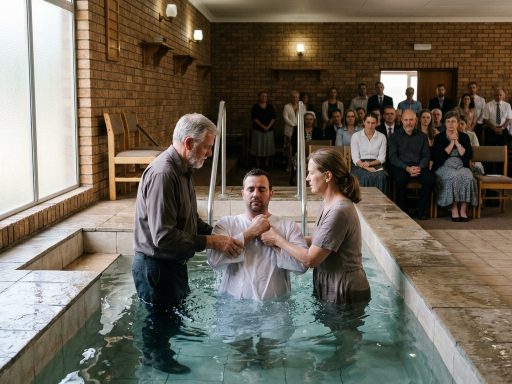
No, the Lutheran Church strongly opposes re-baptism. Because baptism is God’s work and not a human work, God’s promise made in baptism remains valid forever, even if the individual falls away from the faith for a time. To be re-baptized is to imply that God’s first promise was somehow insufficient or invalid.
The practice of infant baptism in the Lutheran Church is a profound and beautiful expression of the Gospel itself. It is a tangible reminder that before we could ever reach out to God, He first reached out to us, claiming us as His beloved children and showering us with His unmerited grace.
Get our latest guides, news, and insights highlighted in your Google Search & AI Overviews.