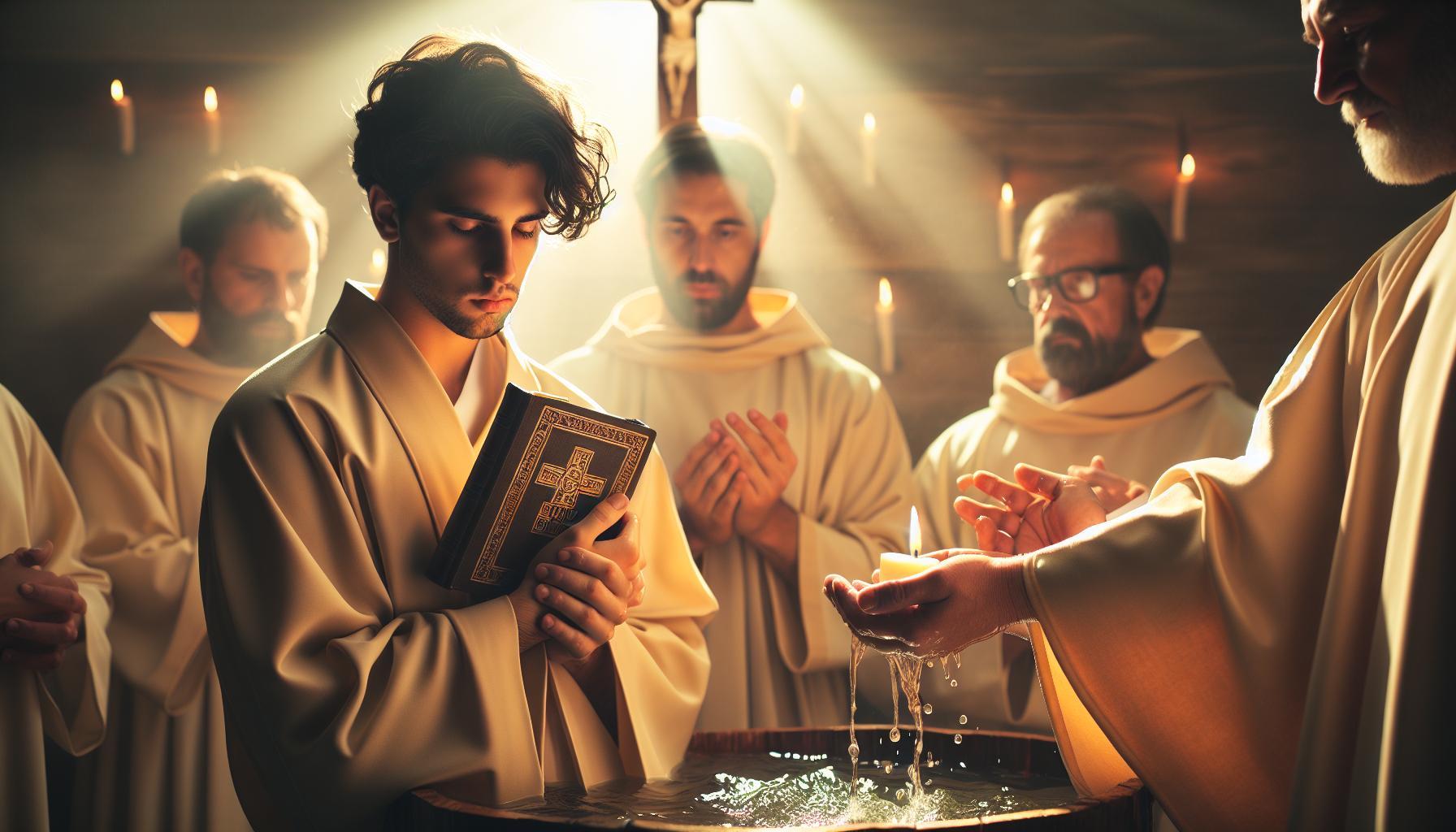
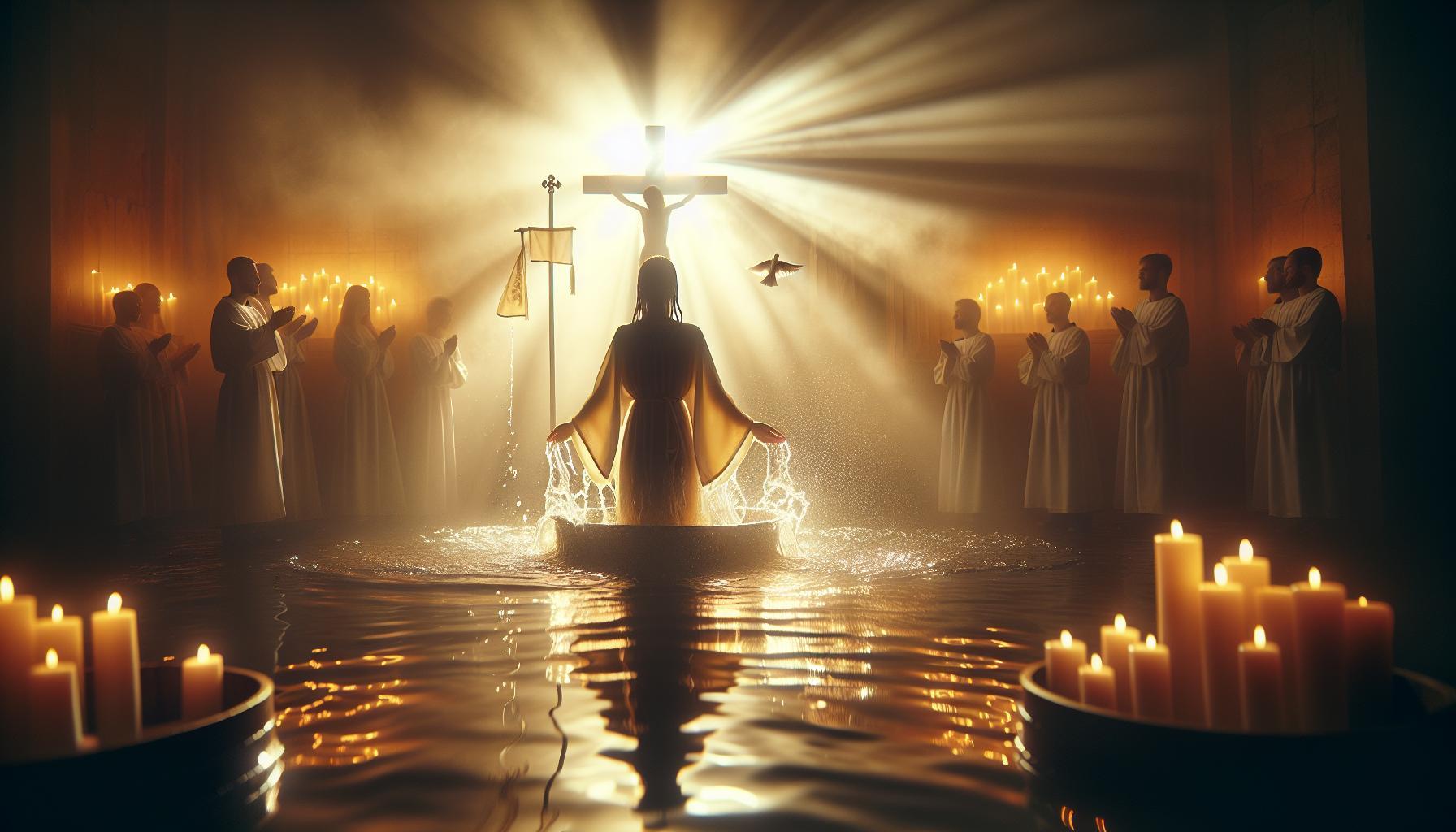
Baptism, a rite steeped in tradition and symbolism, raises fundamental questions about its origins and significance. Understanding its roots not only reveals the spiritual practices of ancient cultures but also illuminates the transformative journey of faith through history. Dive into the rich heritage of this sacred act, tracing its influences from ancient Israelite rituals to early Christian traditions.
The Historical Origins of Baptism: From Ancient Rituals to Modern Practices
Throughout history, the rite of baptism has transformed significantly, reflecting the evolution of religious beliefs and cultural practices. This sacred ceremony, marked by the use of water, is not solely a Christian tradition but has deep roots in various ancient religions. To understand the origins of baptism, it is essential to explore its historical connections and the relevance it holds in modern practices.
Ancient Rituals Influencing Baptism
The practice of using water for purification is seen in many ancient cultures. For instance, Hellenistic Judaism combined various philosophies, including influences from Middle Platonism and early Christian thought, to shape the religious context of baptism. These ancient rituals emphasized spiritual cleansing and renewal, concepts that would later be integrated into Christian baptism practices. Specifically, the Sethian Gnosticism showed a unique adaptation of baptism, exemplified by their Five Seals ritual, where initiates were immersed multiple times in running water as a form of spiritual rebirth Baptism in Early Christianity In the Christian tradition, baptism became a key sacrament, embodying the initiation into the faith. It’s deeply linked to the historical figure of John the Baptist, who is noted for baptizing Jesus in the Jordan River. This act was seen as a pivotal moment, symbolizing the beginning of Jesus’s ministry. The introduction of the Trinitarian formula—”In the name of the Father, and of the Son, and of the Holy Spirit”—provided a concrete theological foundation for baptism, which marked one’s entry into the Christian community. Different Christian denominations adopted varied interpretations and practices regarding baptism, leading to the modern divergence between infant and adult baptisms [1]. Today, baptism serves various functions across different Christian denominations, often reflecting a blend of ancient customs and contemporary beliefs. Baptists and the Christian Church (Disciples of Christ), for example, maintain a strong emphasis on adult baptism, advocating for a personal declaration of faith. In contrast, traditions like Catholicism participate in infant baptism, emphasizing the cleansing of original sin and the inclusion of children into the faith community [1]. These practices highlight how baptism has not only preserved its ancient roots but also how it has adapted to meet the spiritual needs of diverse populations. By appreciating the historical origins of baptism, one can better understand its significance today as a rite of passage, a symbol of faith, and a ritual of community. The evolution of baptism illustrates a journey from its ancient beginnings to its prominent role in modern religious life. Baptism, a practice steeped in spirituality and tradition, serves as a powerful rite of passage across various cultures and religions. It is a symbolic act of purification and commitment that traces its roots back to ancient rituals that predate Christianity, highlighting its universal significance. The spiritual implications of baptism are profound, as it not only marks an individual’s entry into a faith community but also serves as a profound moment of personal transformation and renewal. At the heart of baptism lies water, a powerful symbol of cleansing and new beginnings. In many traditions, water represents purification, embodying the idea of washing away sins and starting anew. For instance, in Christian theology, the act of baptism signifies a believer’s identification with the death and resurrection of Jesus Christ. This is seen as a transformative experience that aligns the individual with Christ’s journey, reflecting an essential aspect of being reborn into a new life of faith [[2](https://thewitness.org/baptism-meaning-modes-and-significance/)]. Similarly, in the Jewish tradition, ritual washing—known as *mikvah*—has been employed for centuries, symbolizing spiritual purity, especially before significant religious events. These practices illustrate how water is leveraged across various faiths to signify a fresh start, a notion that resonates deeply within the fabric of spiritual life. Baptism also emphasizes the importance of community and shared beliefs. In Christian traditions, the presence of godparents or sponsors during the ceremony highlights the communal aspect of faith, reaffirming that baptism is not only an individual commitment but also a collective one[[[1](https://www.bibleanalysis.org/10-symbols-and-rituals-associated-with-baptism/)]. This shared experience fosters a sense of belonging within the faith community and reinforces the support system surrounding the newly baptized. Furthermore, the baptismal vows taken during the ceremony are often seen as a public declaration of faith. In most Christian rites, this declaration initiates a lifelong commitment to follow the teachings of Christ and engage with the broader Christian community, underpinning the sacredness of the ritual [[2](https://thewitness.org/baptism-meaning-modes-and-significance/)]. The practices and interpretations of baptism vary significantly across different traditions, illustrating the multifaceted nature of this sacred rite. For example, while some Christian denominations practice infant baptism, others emphasize believer’s baptism, where an individual makes a conscious decision to accept faith before being baptized. Additionally, the incorporation of the Holy Spirit in the baptismal process, as emphasized in the New Testament, signifies unity with Christ and his church, representing a vital aspect of the Christian faith[[[3](https://www.discoveringtheology.com/blog/baptism-explained-how-this-sacred-rite-transforms-your-spiritual-journey)]. In summary, the origins and expressions of baptism, as explored in the article about its ancient roots, reveal a rich tapestry of meaning that transcends time and culture. By understanding the spiritual significance of baptism within various traditions, individuals can appreciate its profound impact on their faith journeys and the community dynamics that it nurtures. Baptism, a rite steeped in deep spiritual significance, has evolved through centuries, influenced by key figures and pivotal events that have left an imprint on its practice. Understanding the historical context and the roles of these influential persons provides a clearer vision of where this profound tradition originated and how it was shaped over time. One of the most significant figures in the history of baptism is John the Baptist, whose practices and teachings laid the groundwork for Christian baptism. Known for his radical call to repentance, John used water as a powerful symbol of cleansing and spiritual renewal. His baptism of Jesus marked a transformative moment that established the ritual within the Christian faith. This event underscored not only the importance of baptism but also the emergence of new theological interpretations surrounding it. John’s actions prompted early followers to adopt similar practices, linking baptism with repentance and the anticipation of salvation. As Christianity spread, the practice of baptism became more formalized. The early Christian community began developing distinct rituals that incorporated unique elements from Jewish traditions and Hellenistic practices. This evolution is captured in various early texts that reflect on the significance of ritual washing and the communal nature of baptism. By the 2nd century, groups such as the Gnostics developed their interpretations, including complex rituals like the Sethian baptismal rite involving multiple immersions. These diverse practices show that the early Church was not monolithic, but rather a tapestry of beliefs and rituals aspiring to define the essence of faith and initiation. The Council of Nicaea in 325 CE was another crucial event that shaped the understanding of baptism. As Christian orthodoxy began to solidify, the declaration of key doctrines influenced how baptism was perceived and practiced across the empire. Over the following centuries, various Christian denominations would adopt and adapt the rite, from adult baptism, which emphasized personal commitment, to infant baptism, which underscored the belief in original sin. Such transformations reflect not only theological shifts but also responses to societal changes and the need for inclusivity within different communities. Today, the legacy of these figures and events continues to resonate in how baptism is practiced across diverse Christian traditions. The choice between infant and adult baptism, the method of pouring, sprinkling, or immersion, all speak to the historical dialogues and controversies that define this sacred rite. Understanding these influences can guide contemporary believers in deeper engagement with their faith, encouraging personal reflection on the significance of baptism in their spiritual journey. The profound connection between water and spirituality is evident across various cultures, reflecting its essential role in rituals and symbolism. Water has been revered not only for its physical properties but also for its intense spiritual significance. In the context of baptism, this is particularly highlighted; the act of immersing in water serves as a potent metaphor for purification, renewal, and rebirth, echoing themes found in many ancient traditions. Various cultures perceive water as a transformative force. Globally, it symbolizes: In Christianity, water symbolizes transformation and is pivotal in baptism, paralleling its significance in other religions. For instance, in Islam, water represents not just physical cleanliness but also spiritual purification, emphasizing its role in rites and rituals. Similarly, in Hinduism, water is sacred, often linked to various deities and used in purification rituals before prayer and pilgrimage. These cultural interpretations underline a shared understanding of water as a central element in the quest for spiritual fulfillment and connection with the divine. The roots of these beliefs can be traced back to ancient customs. Historical practices, as discussed in “Where Did Baptism Come From? Uncovering Its Ancient Roots,” show that various civilizations utilized water in rituals aimed at marking significant life events, such as births, marriages, and deaths. Ritual baths were performed not only for cleanliness but also to signify a new beginning or the end of an old cycle. This ancient reverence for water provides insight into its continuing significance in contemporary rituals like baptism. By exploring the role of water across different cultures, we can appreciate its universal symbolism as more than just a physical element; it serves as a vital bridge between the earthly and the spiritual realms. Understanding these rich traditions enriches the practice of modern rituals and highlights the enduring power of water in the human experience. Baptism has deep roots in both Scripture and tradition, serving as a cornerstone of early Christian identity and practice. The ritual’s importance is underscored by the extensive theological debates it sparked among the early church fathers, who emphasized its necessity for salvation. In understanding where baptism originated, it’s crucial to explore how this sacrament was practiced and its implications for the early Christian community. Biblical references to baptism highlight its significance both as an initiation rite and a means of expressing faith. The New Testament features numerous accounts, such as Jesus’ own baptism by John the Baptist, which established the precedent for this sacred act. In Matthew 28:19-20, Jesus commands His disciples to “go therefore and make disciples of all nations, baptizing them in the name of the Father and of the Son and of the Holy Spirit.” This directive not only reinforces the importance of baptism as a public declaration of faith but also emphasizes the communal aspect of the early Christian faith. In the early church, baptism evolved into a rich tradition infused with meaning and symbolism. It was often preceded by a series of preparatory rites, including exorcisms aimed at purifying catechumens from sin, which reflects a belief in spiritual transformation. As detailed in contemporary accounts, the first oil used in baptism represented anointing and healing, while a subsequent oil symbolized the newly baptized person’s entry into the priestly, prophetic, and royal mission of Christ[[[3](https://aleteia.org/2019/04/26/how-was-baptism-practiced-in-the-early-church)]. The rite of baptism marked a significant spiritual milestone, with many early Christians undergoing weeks or even months of preparation before the actual event. Additionally, the physical setting of baptism evolved during this period. Archaeological findings reveal early baptisteries, such as the one from a third-century house-church in Syria, indicating that immersion was a central feature of the practice [[2](https://www.bibleodyssey.org/articles/baptism-in-early-christianity)]. This immersion signified complete purification and initiation into the faith, embodying the transformation expected from each believer. By examining baptism through Scripture and tradition, the early church established a profound legacy that continues to shape Christian practice today. Understanding these origins provides valuable insights into the significance of baptism as a vital sacrament in the faith journey of believers, inviting the faithful to reflect on their own experiences of this sacred rite. Throughout history, baptism has served as a significant rite of passage in the Christian faith, representing an individual’s initiation into the community of believers. This sacred practice varies widely among denominations, rooted in diverse theological interpretations and historical traditions. Understanding these differences is essential for believers navigating their own or their families’ baptismal journeys. Baptism can involve a variety of methods for the application of water, each with deep significance:Modern Practices and Variations
Understanding the Spiritual Significance of Baptism in Various Traditions
The Symbolism of Water
Community and Commitment
Diversity in Practice

Key Figures and Events That Shaped the Practice of Baptism
The Role of John the Baptist
The Evolution in Early Christianity
Historical Events and Their Aftermath
The Role of Water: Symbolism and Meaning Across Cultures
Universal Symbolism of Water
Cultural Interpretations
Water in Ancient Practices
Baptism in the Early Church: Insights from Scripture and Tradition
Scriptural Foundations
Tradition and Practice
Navigating Different Baptismal Practices: A Guide for Believers
Understanding Baptismal Variations
| Denomination | Type of Baptism | Primary Method |
|---|---|---|
| Catholic Church | Infant Baptism | Affusion/Aspersion |
| Baptist Churches | Believer’s Baptism | Full Immersion |
| Orthodox Churches | Infant Baptism | Full Immersion |
| Pentecostal Churches | Believer’s Baptism | Full Immersion |
Practical Considerations for Believers
As you explore baptism, consider seeking guidance from pastoral leaders who can address specific theological beliefs and practices in your community. Engaging in open dialogues with family members can also help clarify expectations and implications surrounding baptism. Whether opting for infant baptism or believer’s baptism, the experience should reflect a deeper understanding of the faith’s roots and the transformative power of this ancient ritual.
As you reflect on the question of “Where Did Baptism Come From? Uncovering Its Ancient Roots,” remember that baptism is not merely a ritual; it is a profound expression of faith, community, and identity in Christ that spans across cultures and generations.
Theological Perspectives on Baptism: Sacrament or Symbol?
The practice of baptism has been a topic of theological debate for centuries, with differing perspectives on whether it should be viewed primarily as a sacrament or a symbol. Understanding this distinction requires a deep dive into the historical and spiritual contexts that shape our interpretations of baptism. The roots of baptism can be traced back to Jewish purification rituals, which serve as a backdrop to the Christian practice as discussed in articles like “Where Did Baptism Come From? Uncovering Its Ancient Roots.”
The sacramental view posits that baptism is a means of grace—considered to convey divine blessings and forgiveness to the believer. This perspective is strongly held in particular denominations, which interpret biblical passages such as Acts 2:38 as evidence that baptism plays a crucial role in salvation. Proponents of this view often cite passages that associate baptism with the work of the Holy Spirit, suggesting that the act itself carries inherent spiritual significance.
On the other hand, the symbolic perspective highlights baptism as an outward expression of an inward faith. Rooted in the teachings of early reformers, this view emphasizes that baptism symbolizes the believer’s identification with Christ’s death, burial, and resurrection. For instance, Romans 6:4 states, “We were therefore buried with him through baptism into death,” signifying that the act is a public declaration of faith rather than a means of receiving grace. This approach often resonates with those who emphasize personal faith and a relationship with God over ritualistic observance.
Key Considerations in the Debate
- Historical Context: Baptism’s origins in ceremonial washings underscore its significance in Jewish culture, influencing both viewpoints.
- Scriptural References: Different interpretations of biblical texts contribute to the division between seeing baptism as a sacrament and as a symbol.
- The Role of Faith: For many, the emphasis on personal faith adds weight to the argument that baptism serves primarily as a symbol of one’s commitment to Christ.
Ultimately, the discussion about whether baptism is a sacrament or a symbol is pivotal in shaping ecclesiological identities and practices within various Christian communities. By examining its ancient roots, one can appreciate the ongoing relevance of these theological perspectives and their implications for contemporary faith practices. The debate continues to inspire deeper exploration into what baptism represents for believers today, marrying historical understanding with modern spiritual expression.
Preparing for Baptism: A Journey of Faith and Community Engagement
Baptism has been a fundamental rite across cultures and religions, often steeped in historical significance. The journey to baptize a child involves not just a ceremony, but a profound engagement with the community and the faith that surrounds it. Understanding the origins of baptism can deepen this experience, inviting parents and godparents to fully embrace their roles in nurturing a child’s spiritual life. By exploring the question of “Where Did Baptism Come From? Uncovering Its Ancient Roots,” families can better appreciate the sacrament’s deep-seated traditions and its place in modern faith practices.
Understanding the Sacrament’s Significance
To prepare for baptism effectively, it’s crucial to grasp its meaning beyond the ritual itself. Historically, baptism symbolizes purification, rebirth, and a welcoming into the faith community. Consider these key aspects:
- Spiritual Cleansing: Just as ancient rites involved physical cleansing as a metaphor for spiritual renewal, baptism signifies the washing away of sin and a fresh start.
- Faith Community: This sacrament connects individuals not only to God but to a broader community of believers, emphasizing the communal aspect of faith.
- Commitment: Parents and godparents commit to nurturing the child’s faith journey, which can include ongoing education and participation in church life.
Practical Steps for a Meaningful Preparation
Embarking on the baptism journey should be a meaningful family experience. Here are some practical steps to facilitate this process:
- Engagement with the Church: Attend a baptism preparation class offered by your local church. This enhances understanding and allows parents to ask questions directly related to their faith journey.
- Involve Godparents: Choosing the right godparents is vital; they should be individuals who will actively participate in the child’s spiritual growth.
- Personal Reflections: Encourage parents to reflect on their personal experiences with baptism and faith. Sharing stories can enrich the preparation process.
Community Involvement and Support
As families prepare for baptism, they should also engage the community, embracing support from fellow parishioners. This can take various forms:
- Group Classes: Participating in group classes fosters friendships among parents, allowing shared experiences and insights.
- Volunteer Opportunities: Getting involved in community service can serve as an enriching experience, teaching children the value of faith in action.
- Celebrating Together: Hosting a small gathering post-baptism invites family and friends to celebrate this important milestone, strengthening community ties.
By immersing themselves in the rich history of baptism and actively involving themselves in the community, families not only honor tradition but also cultivate a lasting foundation for their child’s faith journey. This journey reflects not just a personal commitment but also the shared joy of becoming part of a larger spiritual family.
Frequently asked questions
Where Did Baptism Come From? Uncovering Its Ancient Roots?
Baptism originated as a ritual of purification in ancient cultures, significantly emphasized in Judaism. Its current form can be traced back to the teachings and practices of Jesus Christ and the early Christian community.
In the New Testament, baptism is portrayed as a critical rite of initiation into the Christian faith, symbolizing spiritual rebirth and the forgiveness of sins. The practice was adopted by early Christians as a public declaration of faith, reflecting its Jewish roots and the transformative message of Jesus.
What is the significance of baptism in Christianity?
Baptism holds profound significance in Christianity, symbolizing an individual’s entry into the faith community and their cleansing from sin.
In many denominations, it represents not just a physical act but a spiritual transformation, aligning the believer with Christ’s death and resurrection. This sacrament is often seen as essential for salvation, reflecting the belief that it connects the believer directly to God.
Can I baptize my child if I’m not a religious leader?
Many traditions allow parents to baptize their children under certain circumstances, particularly in emergencies.
However, in most mainline Christian denominations, formal baptisms are typically conducted by ordained ministers. It is recommended to seek guidance from your faith community about their specific practices regarding baptism and parental roles.
Why does baptism require water?
Water is essential in baptism as it serves as a potent symbol of purification and life.
Throughout biblical texts, water signifies both cleansing and renewal, reflecting the spiritual reality of being washed clean from sin. The ritual involves immersion, pouring, or sprinkling, each method highlighting the transformative power of the Holy Spirit during this sacred act.
What are the different types of baptism?
There are several types of baptism, including infant baptism, believer’s baptism, and baptism by immersion or pouring.
Infant baptism, prevalent in many denominations, symbolizes the grace of God offered to all. Conversely, believer’s baptism is reserved for individuals who consciously profess their faith. Each tradition reflects diverse theological understandings about the purposes and meanings behind the act of baptism.
How is baptism viewed in different Christian denominations?
Views on baptism vary significantly across Christian denominations, affecting its administration and significance.
For example, some traditions see baptism as a necessary step for salvation, while others view it as an outward expression of inward faith. Understanding these differences can deepen one’s appreciation for the ritual and foster ecumenical dialogue among believers.
Where can I learn more about the history of baptism?
To learn more about the history of baptism, consider exploring theological literature and church history books.
Many resources are available online and through local libraries, focusing on the ritual’s development from ancient practices to its evolution within Christianity. Websites of various denominations often provide in-depth articles on baptism’s biblical foundations and significance.
Key Takeaways
As we conclude our exploration of baptism’s origins, we find ourselves at the intersection of ancient rituals and profound theological meaning. From its roots in Old Testament practices, through the transformative baptism of Jesus and the vibrant rites of the early Church, baptism emerges as a powerful symbol of cleansing, repentance, and new beginnings.
The practices of groups like the Qumran community reveal the eschatological significance of baptism as a preparatory act, echoing the call to clear a path for the divine[[2]](https://theologicalstudies.org.uk/pdf/howard_nt-baptism/02.pdf). Additionally, the Sethian Gnostic tradition illustrates the variety of interpretations surrounding these sacred waters and their role in spiritual rebirth[[[1]](https://en.wikipedia.org/wiki/History_of_baptism).
Baptism continues to inspire and unite believers across diverse denominational backgrounds, reminding us of our shared commitment to faith and community. Whether you are considering baptism for the first time, preparing to baptize someone, or seeking a deeper understanding of this rich tradition, we invite you to journey further into this sacred practice. Dive deeper into the theological dimensions, historical contexts, and practical implications of baptism, and discover how it can transform lives today. Your exploration into the ancient roots of baptism is just the beginning of a beautiful path of faith and renewal.